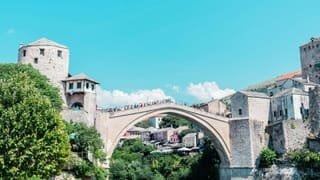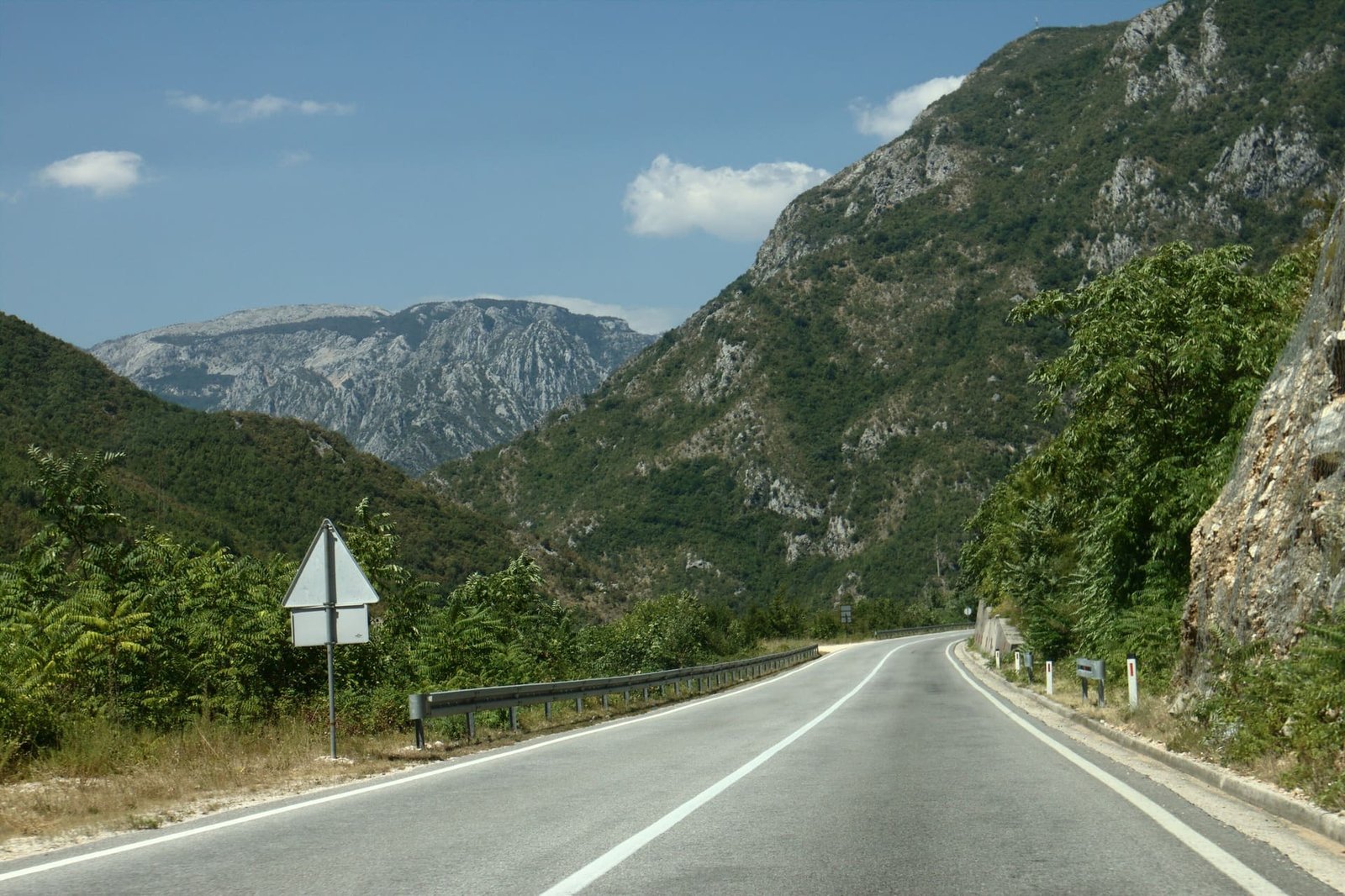
Bosnia is a small country, and almost everything a visitor wants to see is within two or three hours of everything else. What catches people out is the road, not the distance. Valleys, passes, one lane each way and a lorry in front of you mean that 130 km here is not 130 km on a motorway. Give every journey more time than the map suggests and the country becomes easy.
In this guide
- Which airport to fly into
- Sarajevo airport to the city centre
- Tuzla airport: into Tuzla and on to Sarajevo
- Arriving from Croatia
- Buses between cities
- Trains
- Driving and renting a car
- Getting around Sarajevo
- Getting to Jahorina and Bjelašnica
- When a private transfer makes sense
- Which option suits whom
This guide covers the practical side: which airport to pick, how to get into town when you land, and how buses, trains, rental cars and private transfers work once you are here. The most travelled route, Sarajevo to Mostar, has a guide of its own.
| Option | Good for | Keep in mind |
|---|---|---|
| Flying into Sarajevo | Most trips, with flights all year | Fewer low-cost routes in winter |
| Coach | Cheap and frequent, reaches almost every town | Sarajevo has two bus stations |
| Train | Sarajevo to Mostar along the Neretva | Two trains a day, tickets at the counter |
| Rental car | Villages, waterfalls, mountain roads | Winter equipment rule, slow roads |
| Private transfer | Late arrivals, groups, ski gear, stops on the way | Arranged ahead, get a quote |
| Taxi | Short hops inside a city | Licensed cars only, meter on |
Which airport to fly into
Most people land at Sarajevo (SJJ), the country's main airport and the one with by far the most winter flights. Turkish Airlines, Pegasus, Lufthansa, Austrian, Croatia Airlines, Air Serbia and Eurowings all fly here through the cold months, and Wizz Air adds Berlin, Bratislava and Prague in December. Ryanair has no Sarajevo flights in the winter of 2026 to 2027 and returns in spring, so a cheap winter fare from a smaller city may mean a connection, or one of the airports below.
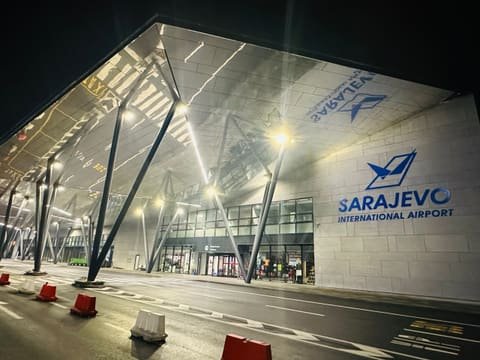
Tuzla (TZL) is the low-cost airport of the north east. Wizz Air bases aircraft here and flies to cities in Germany, Switzerland and Slovakia. It is the right airport for Tuzla, Srebrenica and the north. For Sarajevo it is a long way, which we come to below.
Banja Luka (BNX), in the north west, is mostly a Ryanair airport, with Wizz Air and Air Serbia alongside. It suits Banja Luka, Jajce and the Una valley. Mostar (OMO) is tiny, with a handful of flights a week in winter from Belgrade, Zagreb and Stuttgart. If one of them fits your dates it is a lovely way to arrive, a few kilometres from the old town, but it is not an airport to plan a trip around.
The other gateways are on the Croatian coast. Dubrovnik (DBV) and Split (SPU) have far more flights than any Bosnian airport and, in summer, cheap ones. Mostar is about 140 km from Dubrovnik and 170 km from Split, so plenty of visitors start their Bosnian trip from the sea.
Flight schedules change twice a year, in late March and late October, and airlines add and drop routes in between, so check what is flying before you fix your dates.
Sarajevo airport to the city centre
The airport sits on the flat western edge of the city, about 12 km from Baščaršija, and there are four ways in.
The airport bus. A Centrotrans bus runs from outside the terminal through the city to Baščaršija, ending at Bentbaša at the top of the old town. A ticket costs 5 KM (about €2.50), bought from the driver, and one bag of up to 23 kg travels free. An extra or heavier bag costs another 5 KM. The ride takes around half an hour. The first bus leaves the airport at about 7:30 and the last at about 23:30, but it does not meet every flight and some departures run only on weekdays or only at weekends, so look at the Centrotrans timetable if you land late.
Trolleybus 103. The cheap and slow way. The nearest stop is in Dobrinja, roughly a kilometre from the terminal on foot, and a single ticket is 2.20 KM (about €1.10). It takes 45 minutes or more to reach the centre. With a suitcase on a wet night it is not the one we would pick.
Taxi. The rank is right outside arrivals. Take a licensed car, which has a TAXI sign on the roof and a number plate marked TA. Taxis run on the meter, so ask the driver to switch it on before you set off, and have some convertible marks ready for the fare.
A pre-booked transfer. The driver follows your flight, meets you in the arrivals hall and takes you to your door, whatever time you land. With children, heavy luggage or a midnight arrival, this is the easy option, and everything is agreed before you fly. Ask us for a quote.
Late arrivals deserve a plan. Public transport thins out late in the evening, so decide before you fly how you will reach your hotel, and tell the hotel when you are landing so that someone is up to let you in.
Tuzla airport: into Tuzla and on to Sarajevo
This is the one that surprises people. Tuzla airport is cheap to fly into, and it is about 120 km from Sarajevo, a little over two hours by road through Živinice, Kladanj and Olovo.
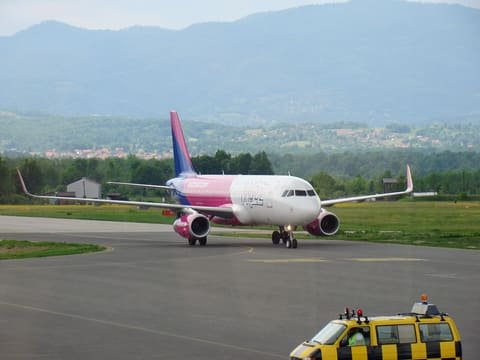
To Tuzla itself. The town is about 13 km from the terminal. A minibus shuttle usually meets arriving flights and runs to Tuzla bus station for about 10 KM (€5), and city bus 34 now calls at the airport for 2.50 KM (about €1.30). Ask at the information desk when you land, as the small operators here change their times often. Taxis wait outside as well.
To Sarajevo. No regular public bus runs from the terminal all the way to Sarajevo. The usual route is the shuttle or the city bus to Tuzla bus station, then a coach to Sarajevo's main station. Coaches leave every hour or two, take about three hours and cost roughly 30 to 36 KM (€15 to €18). Count on four to five hours from landing to hotel, and on an evening flight the last coach may already have gone.
A private transfer from the arrivals hall drives straight to Sarajevo, or to Mostar, Travnik or wherever you are staying, and for two or more people with luggage it is usually the sensible answer. It is one of the runs we do most often, so tell us your flight and we will be there.
Arriving from Croatia
Dubrovnik to Mostar is about 140 km, roughly two and a half hours by car with the border. Split to Mostar is about 170 km and roughly three hours. Coaches run on both routes and take one to two hours longer than a car. In winter the border queues are short. In July and August they can add an hour.
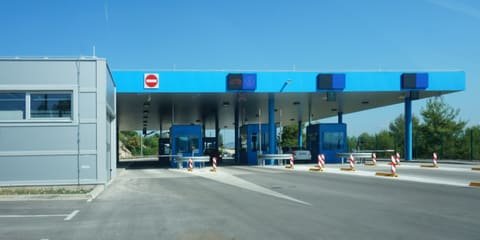
Bring your passport, because it is checked on both sides. If you are driving along the coast between Dubrovnik and Split, the Pelješac bridge now carries you past the short Bosnian coastline at Neum, so you only meet a border if you are actually coming into Bosnia.
From Mostar, Sarajevo is another two to two and a half hours. If you are deciding where to base yourself, read Sarajevo or Mostar first, and if you only have a day to spare from the capital, see Mostar as a day trip from Sarajevo.
Buses between cities
Coaches are how most Bosnians travel, and they reach places no train does. Dozens of companies share the routes. Centrotrans, Autoprevoz and Globtour are the names you will see most.
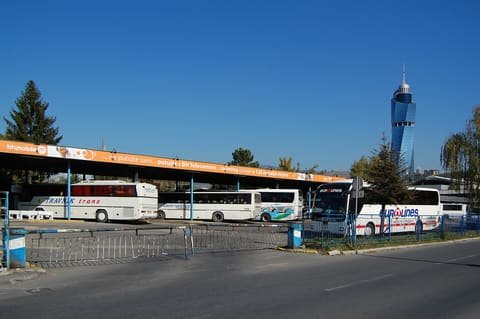
Sarajevo has two bus stations, and it matters which one you need. The main station, beside the railway station, serves Mostar, Tuzla, Zenica, Travnik, Bihać and Banja Luka, along with international routes to Zagreb, Split and Dubrovnik. The East Sarajevo station in Lukavica, on the far south western side of the city near the airport, serves Trebinje, Višegrad, Srebrenica and Belgrade. Trolleybus 103 ends a short walk from it, though with luggage a taxi is easier.
Typical journeys from Sarajevo:
- Mostar: about two and a half hours, with a dozen or so departures a day from early morning to about eight in the evening, around 25 to 33 KM (€13 to €17).
- Tuzla: about three hours, every hour or two, around 30 to 36 KM (€15 to €18).
- Banja Luka: three to four hours through Zenica, around 40 to 45 KM (€20 to €23).
- Travnik: about two hours, and the natural start for central Bosnia.
Jajce, Bihać, Trebinje and Višegrad have fewer buses and longer rides, so check the times a day ahead. Tickets are sold at the station counter, and on many routes from the driver. A bag in the hold usually costs a mark or two extra, paid in cash. A return ticket is normally valid only with the company that sold it, which is a good reason to buy singles.
Trains
Bosnia has few passenger trains, and visitors use one line: Sarajevo to Mostar, which carries on to Čapljina. There are two trains a day each way, one in the morning and one in the late afternoon, and the ride through the Neretva canyon takes just under two hours. A ticket is about 14 to 17 KM (roughly €7 to €9). Buy it at the station counter before you board, as online sales are unreliable.
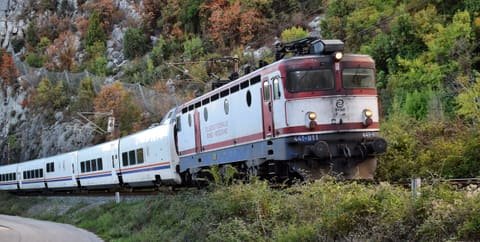
In recent summers a weekend train has continued to the Croatian port of Ploče, and local trains run north from Sarajevo towards Zenica. There is no railway to Tuzla and no direct train to Banja Luka. The timetable changes in mid December, so check the times before you plan a day around the train.
Driving and renting a car
A car gives you the Bosnia that buses miss: Kravice, Blagaj, the villages above the valleys. Main roads are in decent shape, minor roads can be narrow and rough, and in winter a mountain stretch can close for a day.
Motorway. The A1 runs north from Sarajevo past Zenica, and south west for the first part of the way towards Konjic and Mostar, with a separate stretch in the far south near the Croatian border. Tolls are paid by section at the booths. A car pays about 8 KM (€4.10) from Sarajevo to the north side of Zenica and about 2.80 KM (€1.45) from Sarajevo to Tarčin. Where the motorway ends, the road on to Mostar is an ordinary two-lane main road with lorries and bends.
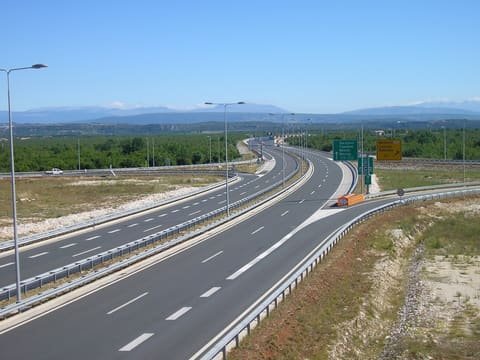
Rules. Dipped headlights stay on day and night, all year. Limits are usually 50 or 60 in towns, 80 on open roads and up to 130 on the motorway, and they are posted, so follow the signs. The alcohol limit is low enough that the only safe amount is none.
Winter. From 1 November to 1 April every car must have winter equipment: winter tyres, or summer tyres with enough tread plus snow chains in the boot. Rental cars are normally fitted for the season, but confirm it at the desk. The passes between Sarajevo and the coast, and the roads up to Jahorina and Bjelašnica, can be icy when the city streets are clear. Our Bosnia in winter guide covers the season in full.
Paperwork. Carry your licence, the car's documents and proof of insurance. Rental desks often ask for an international driving permit as well, so bring one if you can. If you rent in Bosnia and plan to cross into Croatia, Montenegro or Serbia, ask for the cross-border permission and the insurance card when you book, not at the border.
Parking in Sarajevo. The old town is mostly pedestrian and the streets around it are tight. Book a hotel with its own parking, or ask where the nearest garage is, and leave the car there while you are in the city.
Off the road. Mines from the 1990s war remain in some rural and mountain areas. Stay on roads, paved areas and well-used marked paths, and do not walk off into open country or undergrowth without a local guide.
Getting around Sarajevo
Central Sarajevo is compact and you can walk most of it. For anything further, trams run the length of the main street from Baščaršija towards Ilidža, and trolleybuses and buses cover the rest. A single ticket costs 2.20 KM (about €1.10) and a day ticket 7.10 KM (about €3.60) from the kiosks at the main stops. Stamp the ticket in the machine as you board, because inspectors do check.
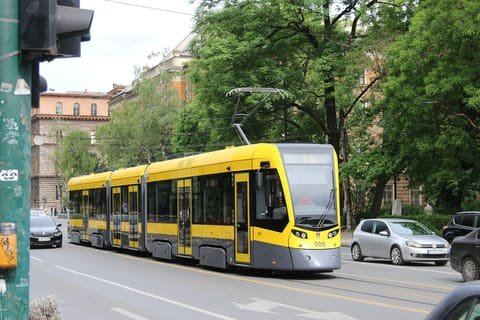
Taxis are plentiful and metered. Uber does not operate in Bosnia, so call a taxi company, use a local taxi app such as mojTaxi, or ask your hotel to ring one. For what to do with your days once you have arrived, start with things to do in Sarajevo.
Getting to Jahorina and Bjelašnica
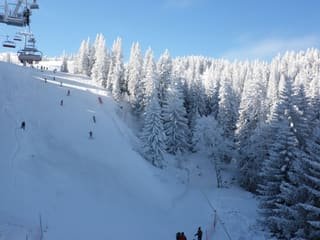
Both ski mountains are close to the city. Bjelašnica is about 23 km from the airport, roughly 40 minutes, and Jahorina is 45 minutes to an hour away. The roads are paved and ploughed, but they climb through bends, and in fresh snow the last few kilometres are slow.
Buses to the mountains are few. In some winters a weekend bus runs from Sarajevo to Bjelašnica, and the schedules change every season, so do not build a ski trip around one. With skis, boots and bags, most people go by car, and a transfer straight from arrivals saves a night in town. Lift passes, slopes and where to stay are in our skiing in Bosnia guide.
When a private transfer makes sense
A private transfer is a car and a driver for your group, from the airport or your hotel to wherever you are going. It earns its place when a flight lands late or leaves early, when you are travelling as a family or a group, when there are ski bags or a pushchair to carry, and on the long runs that public transport handles badly, like Tuzla airport to Sarajevo or Dubrovnik to Mostar. It also lets you stop. Konjic, Počitelj or a viewpoint over the Neretva can be part of the drive, with time to get out and look.
You agree the pickup, the route and the stops beforehand, and we run these all year, across the country and over the border to the Croatian coast. Get a quote for a transfer, or if you would rather make a day of it, look at our private tours.
Which option suits whom
Landing in Sarajevo with a hotel in the old town, take the airport bus by day and a taxi or a transfer at night. Landing in Tuzla for Sarajevo, book a transfer, or set aside the afternoon for the shuttle and the coach. Coming up from the coast, go to Mostar first and stay a night. Travelling alone on a budget, the coaches and the Mostar train will get you almost everywhere.
For how the pieces fit into a week, see our seven day Bosnia itinerary, and for when to come, the best time to visit Bosnia. The wider picture is in our guide to tourism in Bosnia and Herzegovina. When you are ready, send us your dates or tell us what you have in mind, and we will take care of the road.
Header photo: Aktron / Wikimedia Commons (CC BY 3.0)
Frequently Asked Questions