If you only make one trip out of Sarajevo, make it this one. South of the capital the road climbs over the mountains and drops into Herzegovina, where the light turns Mediterranean, the stone turns pale gold, and the Neretva river runs an unlikely shade of green. At the end of it is Mostar and its famous bridge - but the pleasure of this day is everything strung along the way: a dervish house built into a cliff, a medieval town stacked above the river, and a waterfall wide enough to swim in.
This is the route we drive more than any other, and the short version of what we tell guests before we set off: where you are going, why each stop matters, and how to fit them all into a single day.
The route at a glance
Mostar is roughly 130 km from Sarajevo, about two and a quarter hours if you drive straight there. The road follows the Neretva the whole way, through the dramatic canyon south of Konjic, so the journey is part of the point rather than time to be endured.
The four headline stops - Mostar, Blagaj, Počitelj, and Kravice - all sit within a short drive of one another at the southern end. That clustering is what makes the day work: you spend the morning getting down to Mostar, then loop the surrounding sights in the afternoon before heading home. Figure on ten to eleven hours door to door for the full version.
The one real catch is logistics. Mostar is easy to reach by bus or by the lovely valley train, but Blagaj, Počitelj, and Kravice are off the rail line and barely served by public transport, and none of the timetables are built for sightseeing. To see them in a day you need your own wheels or a driver who knows the road.
Konjic: the first stop south
About an hour out of Sarajevo, where the Bosnian mountains give way to the canyon, the little town of Konjic makes a natural first pause. Its Old Stone Bridge over the Neretva, finished in 1682, is one of the most graceful Ottoman bridges in the Balkans - a row of stone arches over water so green it looks dyed. A coffee by the river here is the gentlest possible way to break the drive before the canyon opens up ahead.

Mostar: the heart of Herzegovina
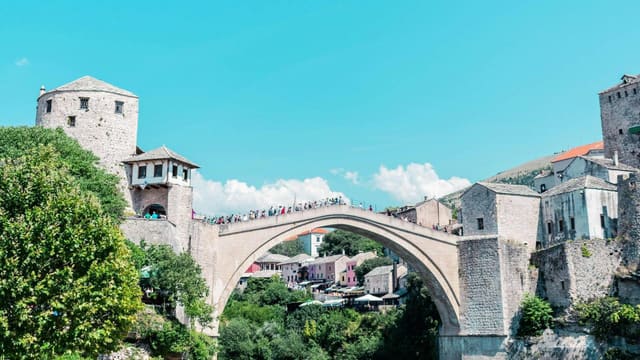
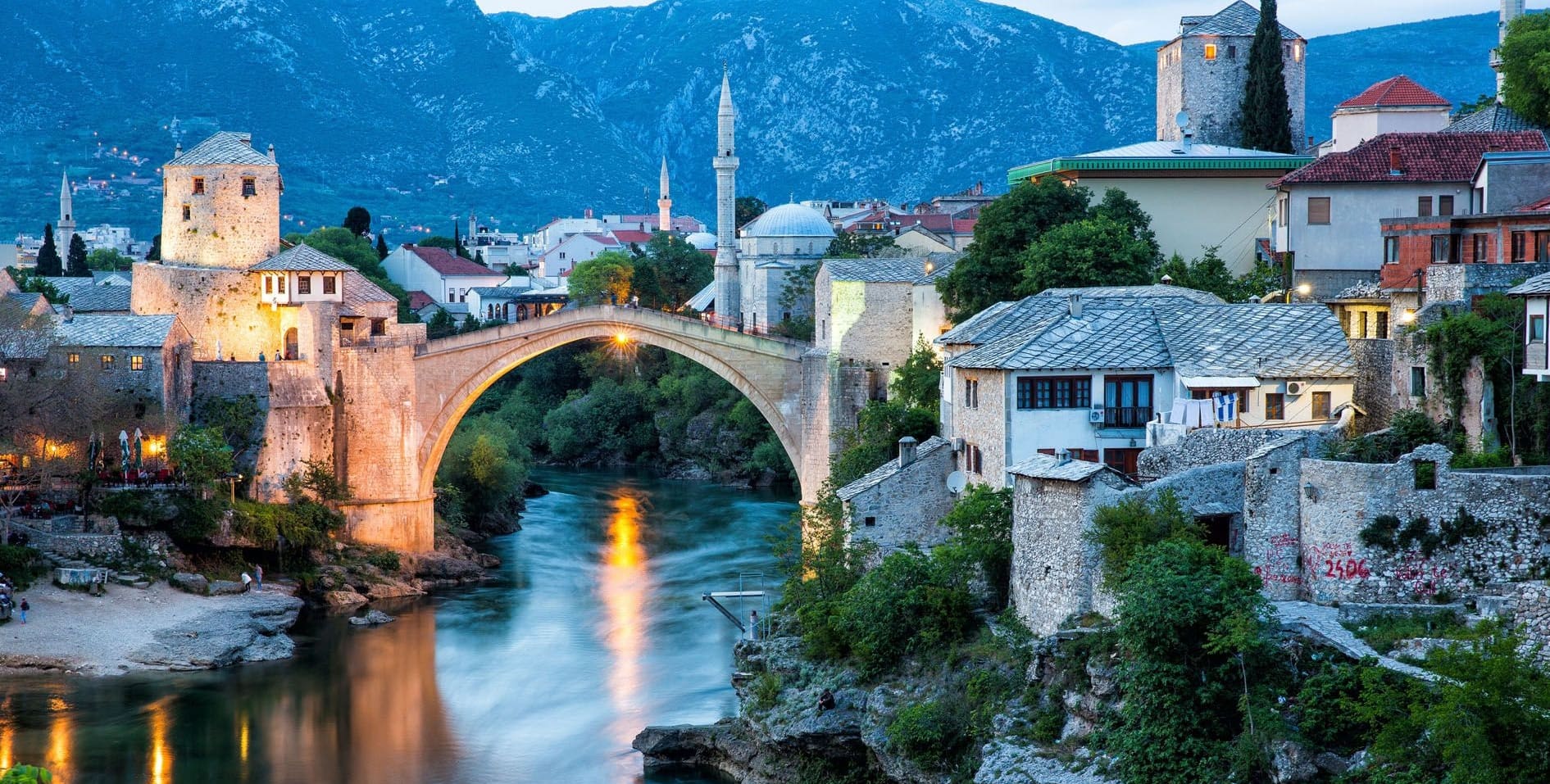
There is no mistaking the centre of Mostar. The Stari Most, the Old Bridge, leaps the Neretva in a single stone arch, and it has been the soul of the city for centuries. Commissioned by Sultan Suleiman the Magnificent and completed in 1566 after nine years' work by the architect Mimar Hayruddin, it stood for 427 years before it was shelled into the river in November 1993, during the war. What you see today was rebuilt stone by stone using the original Ottoman techniques and pale local limestone, with some of the old blocks recovered by divers from the riverbed, and reopened in 2004. The bridge and its old town have been on the UNESCO World Heritage list ever since.

Cross it and you are in the Kujundžiluk, the old bazaar, a cobbled run of coppersmiths, carpet sellers, and cafes where the smell of Bosnian coffee and grilled ćevapi hangs in the air. For the postcard view, climb the minaret of the Koski Mehmed-Pasha Mosque on the eastern bank - the whole sweep of bridge, river, and rooftops opens up beneath you. And if the timing is right you will see Mostar's signature spectacle: young men of the local diving club perched on the parapet, working the crowd for tips before they plunge the twenty-odd metres into the cold green water below, a tradition here going back generations.
Mostar rewards a slow couple of hours and a long lunch as much as any single sight. It is also where most of the day's eating happens, so come hungry.
Blagaj: the dervish house at the spring
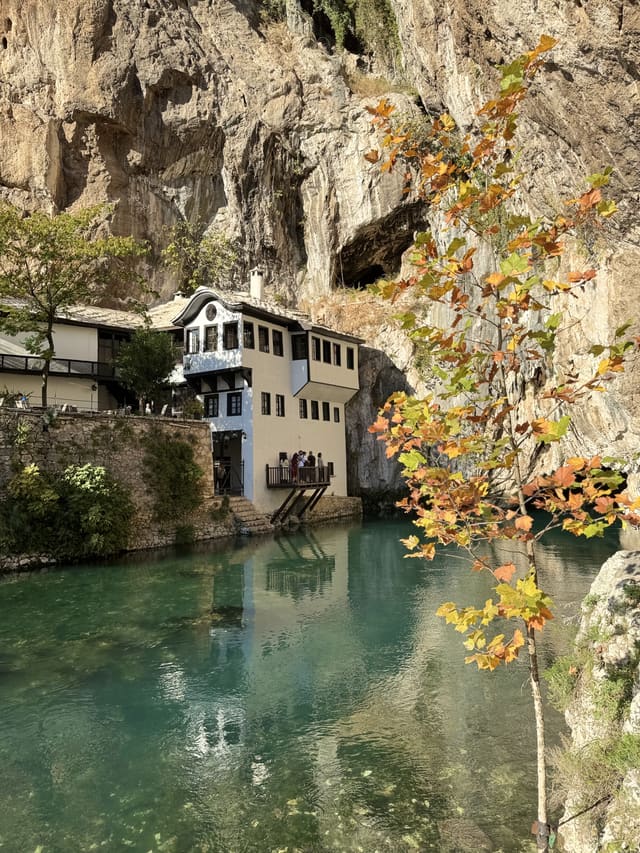
A ten-minute drive southeast of Mostar, tucked where the hills close in, is one of the most photographed spots in the country. At Blagaj, the Buna river surges straight out of the base of a towering limestone cliff - one of the strongest karst springs in Europe - and right beside it, half-built into the rock, stands a white dervish house, the Tekke.

The Tekke has stood here for around five hundred years, a lodge for the wandering Sufi orders who came to pray and meditate at this strange and beautiful meeting of rock and water. First written up by the Ottoman traveller Evliya Çelebi in 1664, it has been in near-continuous use ever since and was carefully restored a little over a decade ago. You can step inside the simple wooden rooms, and in summer take a small boat a few metres into the cave mouth where the river emerges. Mostly, though, people just sit at the water's edge with a coffee and watch that impossible green pour out of the mountain. It is the quietest stop of the day, and often the one guests remember most.
Počitelj: the stone town on the Neretva
Back on the main road and heading south, you will spot Počitelj long before you reach it - a steep cascade of pale stone houses, towers, and a single slim minaret climbing the hillside above the Neretva. It is less a town than a perfectly preserved Ottoman streetscape that you climb on foot.

First fortified under the Bosnian king Tvrtko in 1383 and then shaped over two Ottoman centuries, Počitelj layers a hilltop fortress, a stout round watchtower, a hammam, and a clock tower into a few hundred stepped metres. At its centre sits the Hajji Alija Mosque of 1563, one of the finest small domed mosques in the country - blown up in the 1990s and since rebuilt to its original form. Climb the lanes to the top of the citadel for the view back down the river valley, then catch your breath in the shade. In late summer, villagers sell pomegranates and figs from the trees that give the place its Mediterranean feel. It is a short but steep stop, and a rewarding one.
Kravice: the waterfall finale
Save the water for last. Around forty minutes on from Počitelj, near the Croatian border, the Trebižat river spills over a broad crescent of travertine to form the Kravice waterfalls - a curtain of falls some twenty-five metres high and over a hundred wide, dropping into a wide natural pool ringed by greenery.

Kravice is one of the rare European waterfalls where you can still swim right at the base, and on a hot Herzegovina afternoon there is no better way to end the day. The water is cold, clean, and a shock to the system in the best way. A short path leads down from the car park to the falls, and the park - open roughly April to October for a small entry fee - has cafes, changing rooms, and shaded tables for when you have had enough of the cold. Bring swimming things and a towel between late spring and early autumn; the rest of the year, come for the roar and the photographs.
Making a day of it
Done as a loop, the day has a satisfying shape: the drive down the Neretva and a coffee at Konjic, the late morning and lunch in Mostar, then Blagaj, Počitelj, and a final swim at Kravice before the run home. You will be back in Sarajevo in time for dinner, a little sun-tired and with a camera full of the south.
The sticking point, as ever, is the driving. Mostar is reachable on your own, but the supporting stops are not, and Herzegovina's two-lane roads and summer heat are not everyone's idea of a relaxing day at the wheel. If you would rather leave the route and the stories to a local, that is exactly what our Grand Herzegovina tour is built around - Konjic, Mostar, Blagaj, and a swim at Kravice in one unhurried day from Sarajevo, with a guide to fill in the history. Počitelj sits right on the same road, so it is an easy extension to add on if you want it - just ask when you book and we will fit it into the day. Already based down south? Our Best of Herzegovina day tour runs the same country from Mostar, and if you would rather shape the whole day around your own pace, just tell us what you would like to see and we will build it for you.
Tip: start earlier than you think you need to. Mostar fills with day-trippers from the coast by late morning, and an hour's head start buys you the Old Bridge in something close to quiet.
Herzegovina is the half of the country most visitors fall for, and this single day is the best introduction there is. When you are ready, browse all our tours or get in touch and we will take care of the rest.
Frequently Asked Questions