Bosnia & Herzegovina is the kind of place that keeps surprising you. In a single afternoon you can wander an Ottoman bazaar, sip coffee under an Austro-Hungarian façade, and watch the sun drop behind mountains that hosted a Winter Olympics. It is small, green, and astonishingly varied - and after decades when most travellers skipped straight past it, the word is finally out. Close to two million visitors now come each year, drawn by a mix of history, mountains, rivers, and prices that feel like Europe twenty years ago.
This guide is the short version of what we tell our own guests before they arrive: where to point yourself, when to come, and how to actually get around once you're here.
Sarajevo: where East meets West
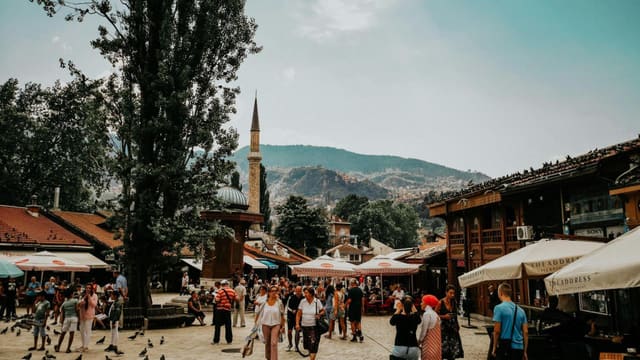
Most trips start in the capital, and rightly so. Sarajevo is a city of layers. Its heart is Baščaršija, the 15th-century bazaar quarter where coppersmiths still hammer in tiny workshops and the smell of grilled ćevapi drifts down cobbled lanes. Walk a few hundred metres west and the Ottoman timber gives way to grand Austro-Hungarian boulevards - there's even a line in the pavement marking where the "East" of the old town meets the "West" of the imperial city.
It's also a place where 20th-century history is impossible to ignore: this is where the First World War was sparked in 1914, and where a brutal siege gripped the city through the early 1990s. Sites like the hand-dug Tunnel of Hope tell that story far better than any textbook. Give Sarajevo two days if you can, and consider a guided loop of the surrounding valley - the glacial springs at Vrelo Bosne, the Roman bridge at Ilidža, and the Olympic peaks of Igman and Bjelašnica all sit within easy reach. (That's exactly the route our Spirit of Sarajevo day tour follows.)
Mostar and the Herzegovina south
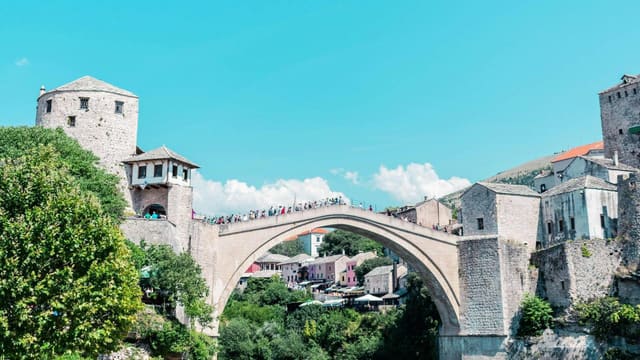
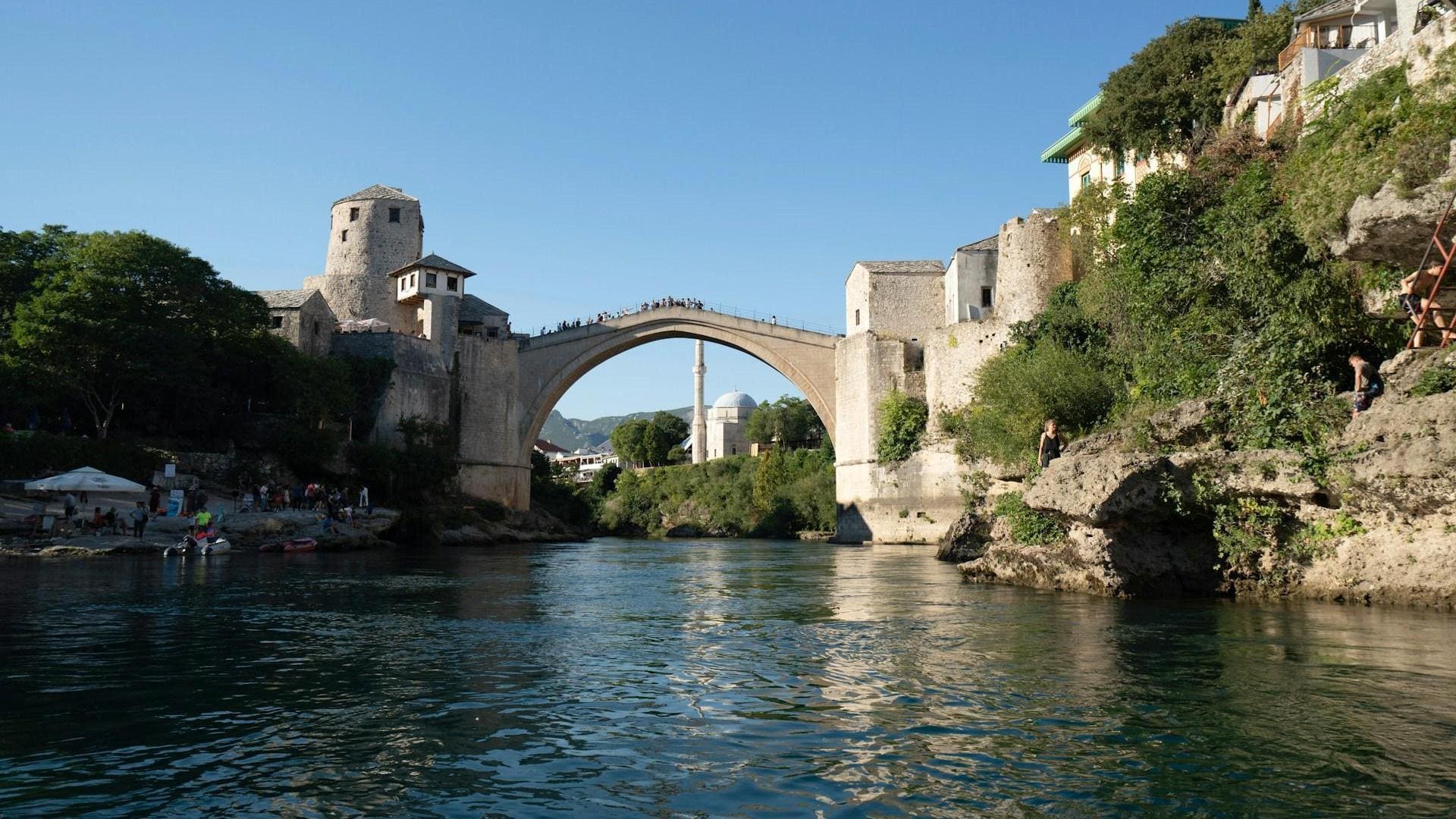
An hour and a half south, the landscape turns Mediterranean - bare limestone hills, fig trees, and rivers in an almost unreal shade of green. The star is Mostar, where the famous Stari Most (Old Bridge) arcs high over the Neretva. The original 16th-century Ottoman bridge was destroyed in the war and painstakingly rebuilt from the same stone; today it's a UNESCO World Heritage Site, and local divers still leap from its parapet into the cold river below.

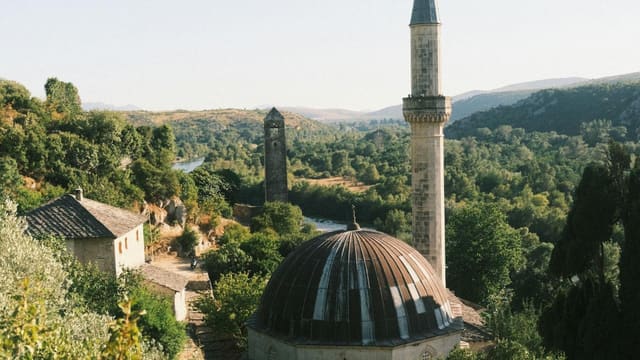
Mostar makes a perfect base for the rest of Herzegovina. Within a short drive you'll find the dervish monastery at Blagaj, tucked beneath a cliff where the Buna river surges out of a cave; the photogenic Ottoman village of Počitelj; and the wide, terraced Kravica waterfalls, which become a swimming hole in summer. It's a region you can happily lose a couple of days in - our Best of Herzegovina tour links the highlights in a single day from Mostar, while the Grand Herzegovina tour reaches them from Sarajevo.
A country built for the outdoors
Roughly half of Bosnia & Herzegovina is still covered in forest, and water is everywhere. The Una in the northwest is a rafting and kayaking river of waterfalls and rapids, protected within Una National Park. Sutjeska, the country's oldest park, shelters Perućica - one of the last primeval forests left in Europe - beneath Maglić, the highest peak. In the centre of the country, the town of Jajce has a 20-metre waterfall tumbling right through its middle, with the medieval lakeside watermills of Pliva nearby.

Come winter, the same mountains that frame Sarajevo turn into some of the best-value ski slopes in Europe. Jahorina and Bjelašnica still run the lifts and pistes built for the 1984 Games, at a fraction of Alpine prices. If you'd rather stay low, central Bosnia's medieval towns - Jajce, Travnik, the Pliva lakes - pair beautifully with the scenery; our Central Bosnia tour is built around exactly that.
When to go
Bosnia is a year-round destination, but the easiest window is April through October. Late spring and early autumn are ideal - warm, green, and uncrowded, though you should pack for the odd rainy day. Midsummer is hot (Herzegovina especially) and Mostar gets busy with day-trippers, so start early. Winter is quiet in the cities and prime time on the slopes.
Getting around
You'll usually fly into Sarajevo, with Tuzla as a budget alternative, and the country is easy to reach overland from Croatia, Serbia, and Montenegro. Once here, intercity buses and minivans link all the main towns cheaply and reliably - the train network is limited, so don't plan around it.
The catch is that many of the best things to see are rural and barely served by public transport. If you're confident on winding two-lane mountain roads, a rental car gives you total freedom. If not, private day tours and transfers with a local driver are the simple fix - you cover the same ground, hear the stories behind each stop, and skip the logistics. (We run point-to-point transfers across the country as well, if you just need to get from A to B.)
How long to stay, and a sample route
A satisfying first trip looks something like this:
- Days 1–2 - Sarajevo: the old town, the war history, and the surrounding valley.
- Day 3 - Sarajevo to Mostar: travel south with stops in Konjic and Jablanica, arriving in Mostar for the evening when the bridge is floodlit and the crowds have gone.
- Day 4 - Herzegovina: Blagaj, Počitelj, and Kravica in a loop.
- Days 5–7 - your choice: central Bosnia and Jajce, the Una river and the northwest, or simply more time to slow down.
Five to seven days covers the highlights comfortably; ten lets you reach the national parks and the quieter corners.
A few practical notes
The currency is the convertible mark (KM / BAM), pegged at about 1.96 to the euro, and the country is genuinely affordable - figure on roughly €35–50 a day as a mid-range traveller. Most visitors get 90 days visa-free, but always check your own nationality before booking. Cards work in the cities; carry cash for small towns and taxis. And don't over-plan: half the pleasure here is a long coffee, a chance conversation, and a road that turns out to be more beautiful than the place it was leading to.
When you're ready to put it together, browse our tours or tell us what you'd like to see - we'll build the trip around you.
Frequently Asked Questions