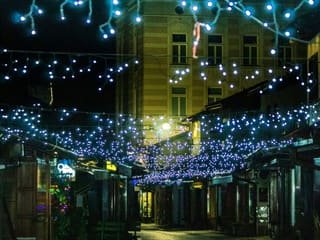
Half an hour from a capital city with a 500-year-old bazaar, there are two mountains that hosted Olympic alpine racing in 1984 and now sell day passes for a fraction of an Alpine lift pass. That is skiing in Bosnia in a sentence, and it explains why the question we hear most from winter visitors is which of the two to pick: Jahorina or Bjelašnica.
In this guide
- Jahorina vs Bjelašnica at a glance
- Jahorina ski resort
- Bjelašnica: steeper, higher, quieter
- Igman, Ravna Planina and the smaller resorts
- Which mountain for whom
- When to go and how reliable is the snow
- Getting there from Sarajevo, Mostar and Dubrovnik
- Gear, lessons and food
- Skiing with a Sarajevo city break
They are close in distance and quite different in character. Jahorina is the large, easy-going resort with hotels at the foot of the lifts. Bjelašnica is higher, steeper and plainer, a mountain you ski rather than a place you stay. This guide takes each in turn, then helps you choose. For the wider picture of the season, our guide to Bosnia in winter covers the weather, the city and what to pack.
Jahorina vs Bjelašnica at a glance
If you only read one paragraph: pick Jahorina for a first trip, a family, a few days in one place, or a long evening on floodlit snow. Pick Bjelašnica for steeper pitches, a bigger vertical drop and shorter queues, particularly if you are staying in Sarajevo and skiing for a single day.
One small practical point. Jahorina lies in Republika Srpska and Bjelašnica in the Federation, and each has its own operator, so a pass for one is not valid on the other. Both sell in convertible marks.
Jahorina ski resort
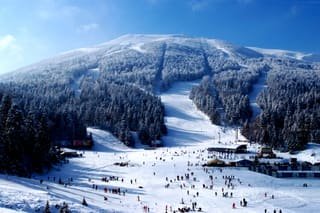
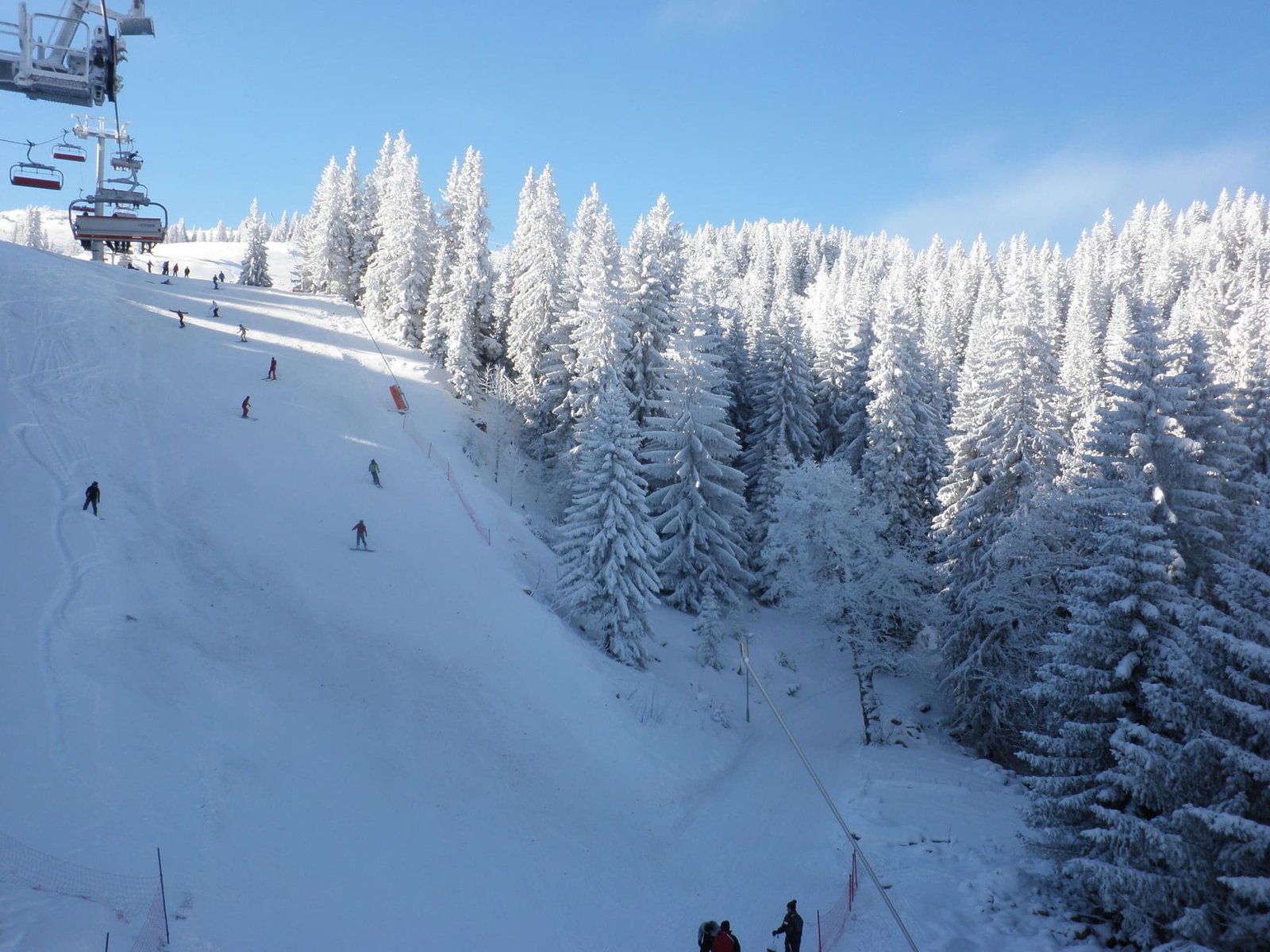
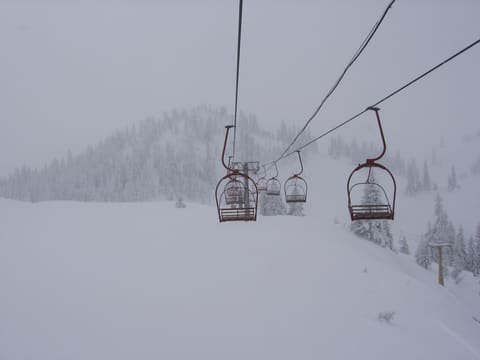
The big one. Jahorina hosted the women's alpine events in 1984, and the resort has kept growing since. It now has 54 km of groomed pistes and 18 lifts, from old drag lifts to modern six-seat chairs. The pistes run from about 1,300 m at the base to a top station above 1,900 m, just below the 1,916 m summit of Ogorjelica, a vertical drop of roughly 600 m.
Terrain
Roughly half the pistes are easy and almost as much again is intermediate. Only a small slice, around 3 km, is properly steep. That makes Jahorina forgiving for beginners and a little tame for experts, although the Olympic black run is a real test when it is not icy. Much of the skiing runs through trees, which helps in flat light.
Night skiing
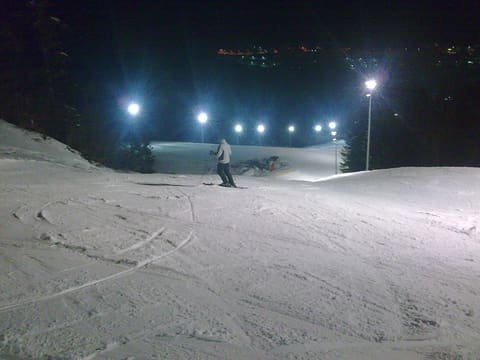
Ten trails are floodlit for night skiing, which is more than most resorts in this price range can say. An evening session is a different kind of skiing, quiet, cold and lit like a film set, with the lights of Sarajevo sometimes visible far below. Evening hours shorten through the season, so look at the current timetable rather than counting on it every night.
Jahorina ski pass prices, 2026/27
The official price list for the new season shows a full-price adult day pass of 98 KM (about 50 euros), a child's at 83 KM (about 42 euros), teens and seniors at 90 KM (about 46 euros), and an adult night pass at 80 KM (about 41 euros). Family tickets have fixed prices whatever the date.
The date you ski changes the price more than your age does. The opening day, 6 December, is 20 percent off. From 7 to 20 December it is 15 percent off, then full price from 21 December to 17 January. Another 15 percent comes off between 18 January and 7 February, full price returns for February, and early March gets 15 percent again. From 8 March to the end of the season it is 30 percent off, which makes the spring days the cheapest on the mountain. Check the official price list before you travel, because rates and discount windows can be revised.
Where to stay on Jahorina
Jahorina is the one Bosnian mountain where you can sleep at the lifts. Hotels such as Vučko and Termag, plus a spread of apartments and small guesthouses, sit within walking distance or a short ski of the base. Staying up here means no daily drive, first tracks in the morning and a lively evening scene, but it also means you are on a mountain with limited choice of places to eat and a long way from the real Sarajevo. Prices jump at New Year and fall back in January.
Bjelašnica: steeper, higher, quieter
Bjelašnica is a long whale-backed mountain rising to 2,067 m, and the men's Olympic racers used it in 1984, when Bill Johnson took the downhill. Skiing starts from the base area of Babin Do, where three chairlifts and five drag lifts carry you up towards the summit. Run lengths total about 14 km on Bjelašnica itself, with a further 2 km on neighbouring Igman. That is a quarter of Jahorina's terrain, but the vertical is bigger: about 800 m, and the Olympic downhill piste is 3.1 km long.
Terrain and snow
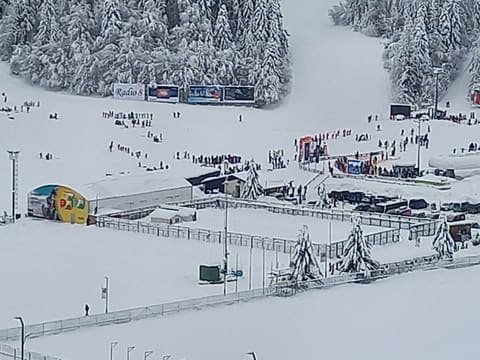
More than half of what is marked is intermediate, with a decent share of steeper stuff. The upper mountain is open and treeless, so it feels wilder than Jahorina and gets windier. Snow is dependable, helped by snowmaking. If you are tempted by the powder outside the marked runs, remember where you are: a war ended here in 1995 and mines remain in some areas. Stay inside the marked ski area, obey the warning signs, and go with a guide if you want to leave the pistes.
Night skiing and passes
Some runs on Babin Do are lit for evening skiing. Evening sessions are shorter and fewer late in the season, so check the timetable before you go.
An adult day pass for 2026/27 is 69 KM at the ticket office or 65 KM bought online, about 35 euros, which makes Bjelašnica the cheaper of the two mountains. Season passes are valid until 15 April 2027.
Where to stay near Bjelašnica
There is a small cluster of hotels and apartments at Babin Do, including the Olympic-era Maršal. It is peaceful, and the mountain feels empty on weekdays, but nights are quiet and options for dinner are few. Most visitors do what you can easily do from Sarajevo: sleep in town and drive up.
Igman, Ravna Planina and the smaller resorts
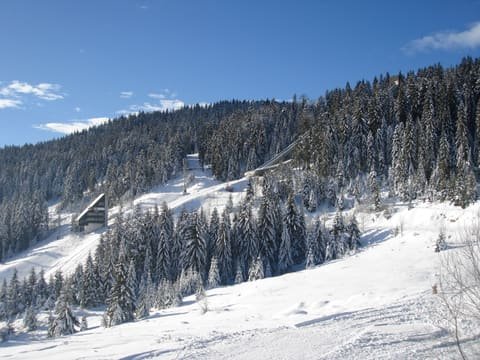
Igman is the plateau between the two, where the 1984 ski jumpers and cross-country skiers competed. At Malo Polje a handful of short, gentle lifts make it a good choice for small children and first-ever days on snow. Veliko Polje, nearby, has lit cross-country trails.
Elsewhere, Ravna Planina, close to Jahorina near Pale, is a small gentle area with a gondola and a platter lift and is popular with beginners. Vlašić, above Travnik in central Bosnia, has around 9 km of runs and fits neatly into a trip that also takes in Travnik and Jajce. Kupres, on a high plateau in the south-west, is a local favourite. None of them is a reason to skip Jahorina or Bjelašnica on a first visit.
Which mountain for whom
Beginners. Jahorina, without much debate. It has the most easy terrain, many ski schools, and hotels where you can drop kids off at a ski kindergarten. Igman's baby lifts are a gentler first hour still.
Families. Jahorina again, with the wider pistes, the family tickets and the base-village facilities. A hotel with its own ski school and childcare makes a week of this easy.
Confident skiers and freeriders. Bjelašnica for its vertical, its open upper slopes and quieter weekday queues. Experienced skiers can also dip into Jahorina's Olympic black run, but should not expect a lot of challenge in marked terrain. Any off-piste skiing should be with a local guide, for avalanche reasons and because of the mine risk mentioned above.
Night owls. Jahorina, for its ten floodlit trails.
Non-skiers. Both are worth the ride. Jahorina has the better village, with sledging, walks along cleared paths and plenty of places to sit with a hot drink; Bjelašnica offers wide views from the summit area.
When to go and how reliable is the snow
Jahorina's price list names 6 December 2026 as opening day, and Bjelašnica usually follows in the second half of December. Those are targets: the lifts open when the snow does. Both mountains rely on natural snow topped up by snowmaking, and the dependable stretch is from January to early March. Early December can be thin, Christmas and New Year are busy and pricey, and by late March the lower slopes go soft in the afternoon.
For the cheapest skiing, go midweek and either in late January or after 8 March.
Getting there from Sarajevo, Mostar and Dubrovnik
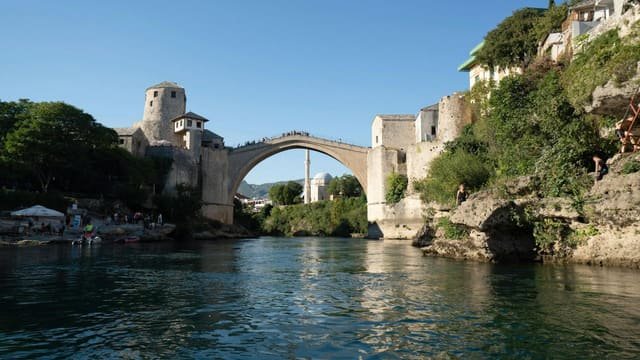
Jahorina is about 28 km from the centre of Sarajevo and takes around 45 minutes, longer in snow. Bjelašnica is about 30 km away, and about 23 km from the airport, which makes it the closer one if you are landing and heading straight up. From Mostar the drive to Sarajevo is about 130 km and two hours, so the mountains are roughly three hours away. From Dubrovnik it is around 270 km and four and a half to five hours to Sarajevo, border included, before the final climb. For a longer trip, you can split it, stopping in Mostar in winter on the way.
The road to each resort is paved and ploughed, but it climbs through bends, and snow is common. Winter equipment is compulsory from 1 November to 1 April, meaning winter tyres, or summer tyres with enough tread plus snow chains in the boot. There are seasonal buses, but usually one morning departure and one afternoon return, with schedules that change every year, so we would not build a plan around them.
The simplest route is a driver. We run transfers from Sarajevo airport, from the city and from Dubrovnik to Jahorina and Bjelašnica, and we also arrange ski days from Sarajevo with the pick-up and drop-off at your hotel. Ski bags go in the boot and you stay out of the mountain traffic. Tell us your dates and which mountain on the booking page, or ask for a custom tour if you want to build ski days around the sights.
Tip: leave Sarajevo before 8am on a weekend morning. Half the city drives up at the same time, and the last stretch of road is where it shows.
Gear, lessons and food
Hire shops sit at the base of both mountains and cover skis, boots, poles, helmets and snowboards. Rental is modest by Alpine standards, and shops quote on the spot. Bring your own helmet and goggles if you can.
Lessons are reasonable too. At Jahorina's ski school a private hour with an instructor has been around 70 KM, a three-day group course of two hours a day around 160 KM, and a two-day children's course for ages 6 to 11 around 300 KM, so check the current list before booking. Many hotels run their own ski schools as well.
Lunch is half the point. Mountain huts and hotel terraces serve grilled meat, bean soup, pita, and bread with thick kajmak cream, and a plate will cost far less than at an Alpine hut. In the evening, the bars on Jahorina fill with Sarajevo students and families, and a glass of rakija to finish the day is traditional. Bjelašnica has less of a scene, so plan on dinner in town.
Skiing with a Sarajevo city break
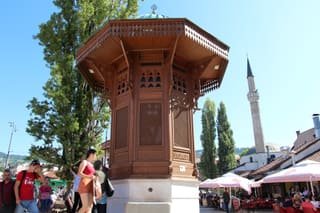
The mountains and the city work well together, because the two sides of a Sarajevo trip are so different. A sensible rhythm is a morning on the slopes, a late lunch back in town, then an evening in Baščaršija. If you ski for one or two days and spend the rest in the city, our winter weekend in Sarajevo guide fills the other days, and Christmas and New Year in Sarajevo covers the busiest week of the season. If you want to see where the Olympic races were held, our guide to the 1984 Winter Olympics sites has the full list, from the bobsled track to the ski jump.
One thing to leave for summer: the remote village of Lukomir, in the mountains behind Bjelašnica. The road is buried in snow from around December until late April or May, and cannot be reached except on foot or skis. Save it for warmer weather.
If you would like to organise a ski trip with a driver, browse our tours or get in touch with your dates, and we will plan the days around the snow.
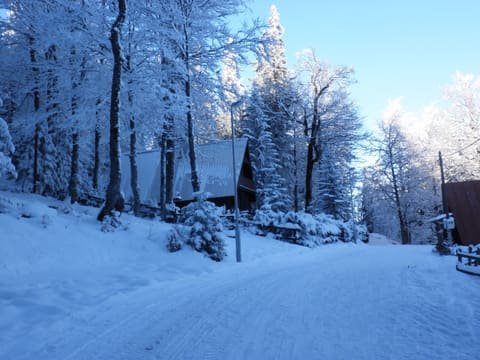
Header photo: nikola_pu / Wikimedia Commons (CC BY-SA 3.0)
Frequently Asked Questions