It is the question we hear more than any other, usually from someone with five or six days in Bosnia and a map spread out on the table: Sarajevo or Mostar? The honest answer is that you should see both, and that the real question is how to split your nights. The two cities are only about 130 km apart, but they could hardly be more different, and the right choice depends on what kind of trip you are having.
In this guide
Here is how we would explain it to a guest over coffee: what each city is like, whether it lives up to the hype, how many days to give it, where to sleep, and when it makes sense to base yourself in one and visit the other for the day.
The short answer
If you only remember one thing, make it this. Sarajevo is the city to stay in. Mostar is the city to wake up in.
Sarajevo rewards time. It is a living, working capital, with neighbourhoods to wander, a food scene that goes well beyond the tourist grills, and a history that takes more than an afternoon to absorb. Two or three nights is the sweet spot.
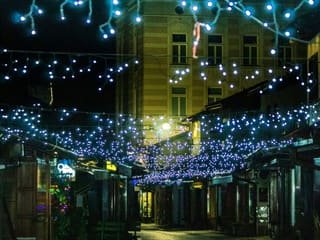
Mostar is smaller and more instantly beautiful. Its old town is compact enough to see in a day, but its best hours are the ones the coach tours miss: the evening, when the stone glows and the river turns dark green, and the early morning, when you can have the Old Bridge almost to yourself. One night is perfect, two if you want to explore the countryside around it.
| Sarajevo | Mostar | |
|---|---|---|
| Feels like | A real capital, layered and lived-in | A beautiful small town on a river |
| Ideal stay | 2-3 nights | 1 night, 2 as a base |
| Best for | History, food, cafe life, the 1990s story | The Old Bridge, evening light, day trips south |
| Crowds | Steady, spread across the city | Heavy midday in summer, quiet at night |
| Summer heat | Warm, cooler nights in the valley | Often 33 degrees and up |
| Getting there | Main international airport | Small airport, few flights; close to the Croatian coast |
Is Sarajevo worth visiting?
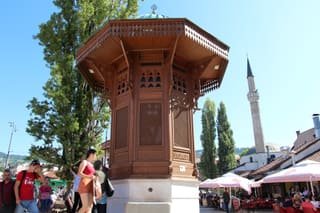
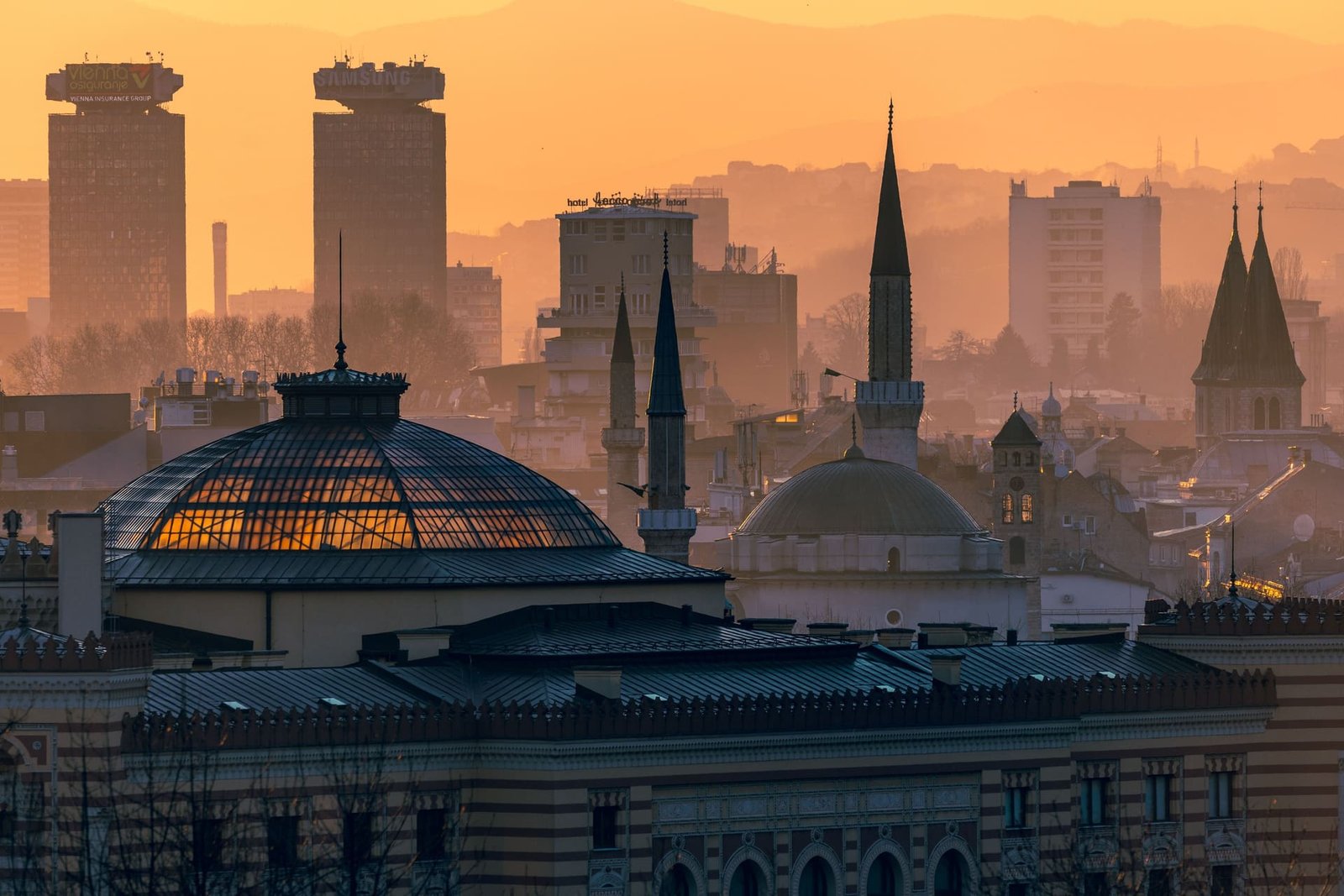
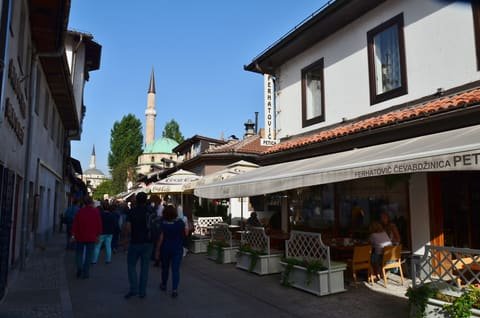
Yes, and it tends to surprise people. Sarajevo sits in a long valley ringed by mountains, and walking from one end of the centre to the other feels like moving through centuries. You start in Baščaršija, the Ottoman market quarter laid out in the 15th and 16th centuries, where coppersmiths still hammer away in the lane named after them and the smell of grilled ćevapi drifts out of every other doorway. Keep walking and the low wooden shops give way to the grand facades of the Austro-Hungarian city, then to the tower blocks of the socialist years.
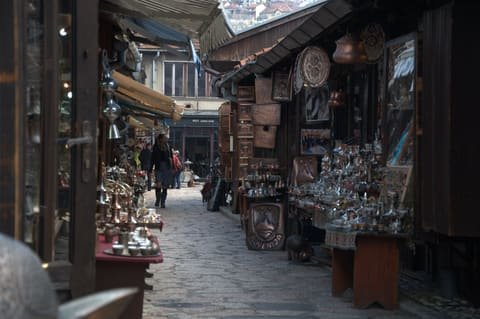
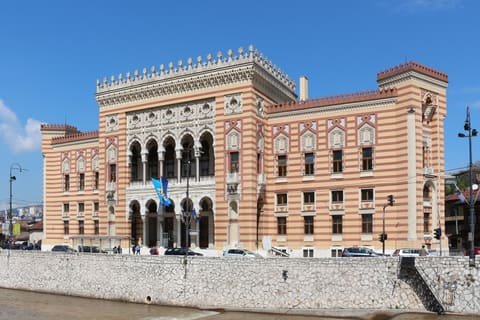
Along the way are some of the most significant few hundred metres in modern European history. The Latin Bridge marks the corner where Archduke Franz Ferdinand was shot in June 1914, the spark for the First World War. The striped, Moorish-style City Hall was the national library until it burned in 1992 and has since been rebuilt. And the story of the 1990s, when the city lived through a siege of nearly four years, is told with real care in places like the War Childhood Museum and the Tunnel of Hope out by the airport.
It would be a mistake to make Sarajevo sound heavy, though. This is a city of long coffees and late dinners, of people out walking on Ferhadija on a weeknight, of cable cars and mountain views ten minutes from the centre. It is also one of the cheapest capitals in Europe to eat and sleep in. For more on the history, see our guide to the historical sites you can visit from Sarajevo.
Is Mostar worth visiting?
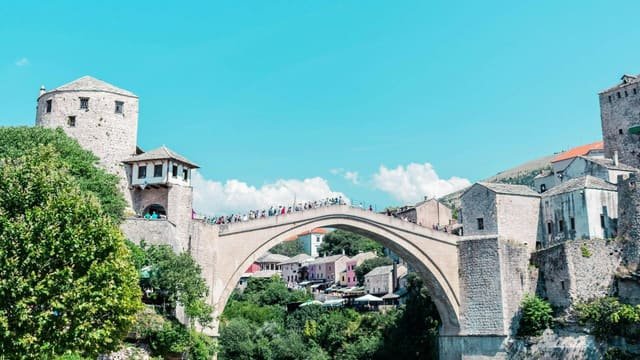
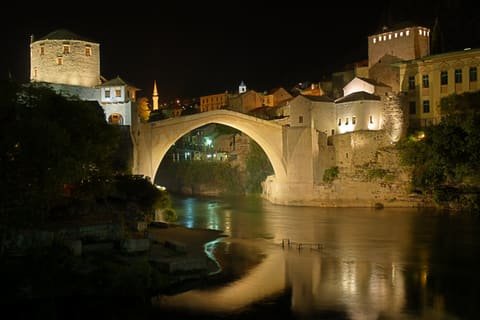
Also yes, with one condition: do not rush it. Mostar's Stari Most, the Old Bridge, is one of the great sights of the Balkans, a single pale stone arch thrown across the Neretva in 1566. It was destroyed in 1993 and rebuilt with the original techniques, and the bridge and the old town around it are now on the UNESCO World Heritage list. On either side runs the old bazaar, a cobbled street of copper, carpets and cafes, with minarets and mountains behind.
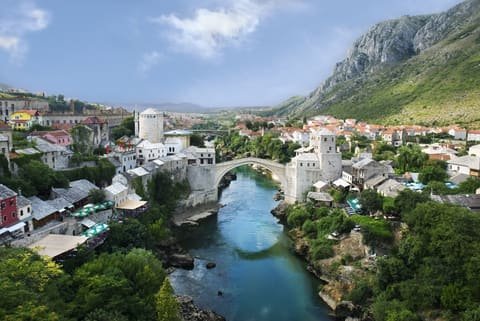
The condition is the crowds. Mostar is the easiest day trip in the country from Dubrovnik, Split and Sarajevo alike, so from late morning to mid-afternoon in summer the old town can feel like a queue. The coaches start leaving around four, and by evening the place belongs to the people staying the night. That is when Mostar is at its most magical, and it is the single best reason to sleep there rather than pass through.
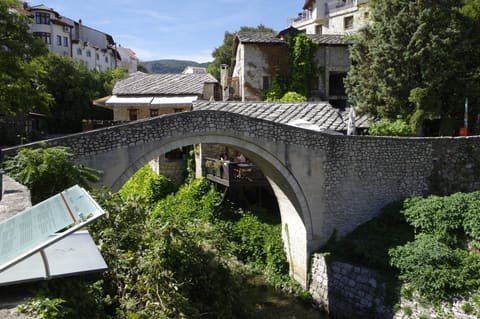
There is more to the town than the famous bridge, too. A few steps upstream is the little Crooked Bridge, a miniature version over the Radobolja stream, tucked between stone houses and restaurant terraces. It is a good place to start an evening walk.
Mostar is also hot. July and August highs are routinely above 33 degrees and heatwaves go well past 40, so in high summer plan your walking for the morning and evening. Our best time to visit Bosnia guide goes through the weather month by month.
How many days in Sarajevo?
Two full days is the minimum we would suggest. One for the old town, the Latin Bridge, City Hall and the Austro-Hungarian centre. One for the 1990s history and the views: a museum in the morning, then the cable car up Trebević or a sunset climb to the Yellow Fortress above the old town.
Three days is better. It lets you add the sights on the edge of the city that are awkward to reach on your own: the spring of the Bosna river at Vrelo Bosne, the old Roman Bridge at Ilidža and the Tunnel of Hope. Our Spirit of Sarajevo tour strings those together in a single day by car. A third day also leaves room for a day trip, to Mostar or to the old royal towns of Travnik and Jajce.
How many days in Mostar?
One night is right for most people. Arrive in the afternoon, walk the old town as the crowds thin out, have dinner by the river, and be on the bridge early the next morning before the first coach arrives. You will have seen Mostar properly.
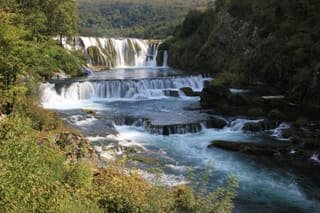
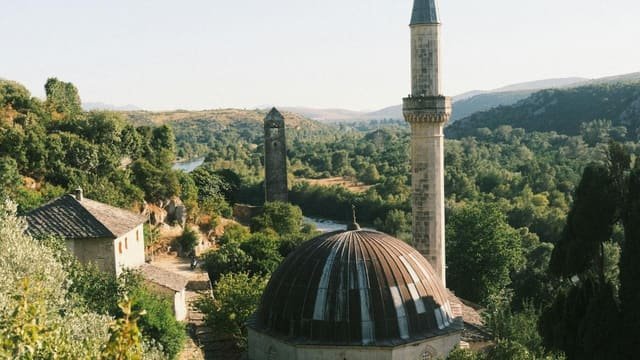
Two nights make sense if you want to use Mostar as a base for the countryside around it, which is where Herzegovina really shines. The dervish house at Blagaj is about 15 minutes away, the fortified village of Počitelj about half an hour, and the Kravice waterfalls about 45 minutes. None of them are well served by buses, so you will need a car or a driver. Our Best of Herzegovina tour covers all three from Mostar in a day.
Where to stay in Sarajevo
Sarajevo's centre is long and narrow, so where you sleep decides how much walking you do. These are the areas we suggest to guests.
- Baščaršija (the old town). The obvious choice for a first visit: step out of your door and you are in the bazaar, with the Latin Bridge and City Hall a few minutes away. It is the liveliest and most touristy part of town, so pick a room on a side street if you are a light sleeper.
- Ferhadija and the Austro-Hungarian centre. The flat, pedestrian streets running west from the old town towards the cathedral. Quieter at night, full of cafes and shops, and still a five-minute walk from Baščaršija. A good compromise for most people.
- Bistrik, Kovači and Vratnik. The hillside neighbourhoods above the old town, with old houses, small guesthouses and wonderful views over the valley. The catch is the gradient: some streets are very steep, so check exactly where your accommodation is before booking, especially with luggage or limited mobility.
- Marijin Dvor. The modern business district further west, with the bigger hotels and the shopping centre. Practical rather than charming, and a tram or taxi ride from the old town.
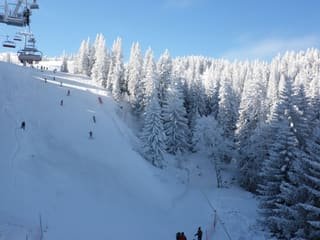
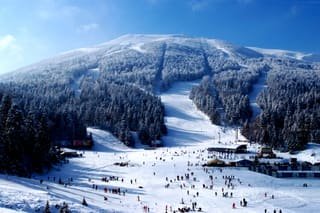
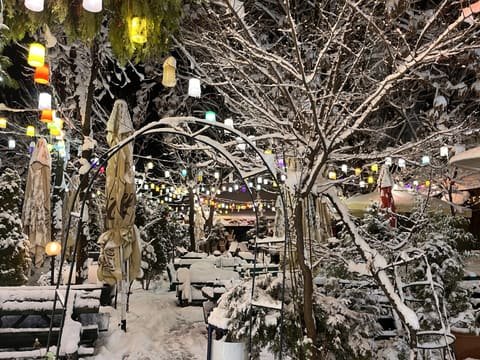
Coming in winter? Sarajevo is a fine winter city, with snow on the rooftops and ski slopes half an hour away. Our Bosnia in winter guide covers what to expect.
Where to stay in Mostar
Mostar is small, and almost everywhere central is walkable, but a few streets make a big difference to your evening.
- The old town, near the bridge. Stone guesthouses and boutique hotels on both banks, some with terraces over the river. Expect day-time bustle and wonderful evenings. Book early for May to September, when the best rooms go months ahead.
- A few streets back from the bazaar. The same short walk to the bridge, noticeably quieter at night, often better value. Check listings carefully, as "near the Old Bridge" can mean anything from two minutes to twenty.
- The west side, around Spanish Square. The Austro-Hungarian part of town across the main boulevard, with a more local feel, newer bars and easier parking. Ten to fifteen minutes on foot from the bridge, and a sensible choice if you are driving.
Base in one, day-trip the other
Because the two cities are so close, you do not have to sleep in both. The journey takes about two hours by car or by the train, which follows the Neretva canyon and is one of the prettiest rides in the region. There are only a couple of trains a day, typically one early morning and one late afternoon, and a ticket costs about 14 KM (around €7). Buses are more frequent but slower. Our Sarajevo to Mostar guide compares every option.
Base in Sarajevo and day-trip Mostar if you are flying in and out of Sarajevo, which has the country's main international airport, or if you want the richer city. The drawback is that you see Mostar at its busiest. A guided day trip helps here: our Grand Herzegovina tour leaves Sarajevo in the morning and takes in Konjic, Mostar, Blagaj and Kravice before bringing you back the same evening, which no bus or train can do. For the full picture of that day, see our Mostar day trip from Sarajevo guide.
Base in Mostar and day-trip Sarajevo only if you are arriving from the Croatian coast and your trip is mostly about Herzegovina. Mostar is closer to Dubrovnik and Split and to the sights of the south, but Sarajevo really needs a night or two of its own.
Stay in both if you have five days or more. It is what we recommend most often.
Which to choose, by trip length
- One night in Bosnia: Mostar. It gives you the most memorable evening for the least time, especially if you are coming from the coast.
- Two or three nights: Sarajevo, with Mostar as a day trip.
- Four or five nights: three in Sarajevo, one or two in Mostar. Travel between them with a stop at Konjic or on a tour that does the sightseeing on the way.
- A week: both cities plus a day in Central Bosnia and a day around Blagaj, Počitelj and Kravice. Our 7-day Bosnia itinerary lays it out day by day.
Let us plan it with you
Whichever way you split it, we can handle the parts in between: a private transfer from Sarajevo to Mostar with stops along the way, a day tour from either city, or a custom trip built around your dates. Tell us your plans and we will suggest the split that suits you, or browse all our Bosnia tours.
Frequently Asked Questions