Most people picture Bosnia in summer: green rivers, stone bridges, swimmers under a waterfall. Winter is the version locals know just as well and visitors almost never see. Snow settles on the domes and chimneys of Sarajevo's old town, the smell of wood smoke and roasting coffee hangs in the lanes, and the mountains that hosted the 1984 Winter Olympics fill up with skiers paying a fraction of Alpine prices. Two hours south, Mostar sits in mild Mediterranean air with its famous bridge nearly empty.
It is not for everyone, and there are a couple of things you should know before you book. But if you like your cities atmospheric and your slopes uncrowded, this may be the best-kept secret in Europe's winter calendar.
What winter actually looks like
Bosnia and Herzegovina has two winters. Sarajevo and the central highlands get the continental kind: highs around 4°C in December and January, nights a few degrees below zero, and the occasional sharp cold snap. Snow is common from December into March, although in the city it comes and goes. Days are short, with about nine hours of daylight around the new year, so plan to be outdoors in the middle of the day and at a table by dusk.
Mostar and the rest of Herzegovina barely notice. Daytime temperatures hover around 10°C, frost is unusual, and snow on the Old Bridge is rare enough to make the evening news. What Herzegovina does get is rain, especially in November and December.
Up on the ski mountains it is a proper winter, below freezing all day with deep, dependable snow.
Sarajevo in the snow
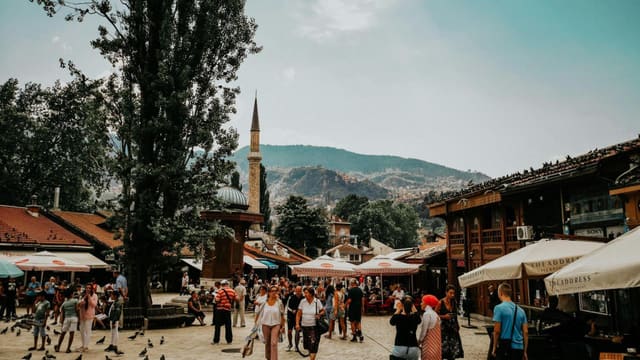
Sarajevo suits the cold. The old Ottoman quarter, Baščaršija, is a tight grid of low shops and coppersmiths' lanes that looks its best under snow, and the city's whole way of life - slow coffee, long lunches, conversation - was made for days when nobody wants to be outside for long. Order a Bosnian coffee, which arrives in a copper džezva with a cube of sugar and a piece of lokum, and do what the locals do: take an hour over it.
Winter food here is worth the trip on its own. Look for begova čorba, a thick chicken and okra soup, klepe, small meat dumplings under garlicky yoghurt, and slow-cooked stews served in clay pots. Finish with tufahija, a poached apple stuffed with walnuts. On a cold evening, street sellers and cafes pour hot salep, a sweet, milky drink dusted with cinnamon that dates back to Ottoman times.
Most of the city's sights are indoors or quick to reach, which makes them ideal winter material. The Tunnel of Hope, the lifeline dug under the airport during the 1990s siege, stays open all winter on shorter hours, roughly 9am to 4pm. The museums and galleries in the centre, the Gazi Husrev-beg Mosque, the restored City Hall, and the spot by the Latin Bridge where the First World War was set in motion are all within a ten-minute walk of each other. Our Spirit of Sarajevo tour strings the out-of-town sights together by car, which is a good deal more pleasant in January than waiting for a tram. For more on the history, see our guide to the historical sites around Sarajevo.
December brings a holiday market with wooden stalls and an ice rink to the city centre, and the New Year is celebrated with several nights of free open-air concerts. Because Sarajevo is home to Muslims, Orthodox Christians, and Catholics, the festive season is long: Catholic Christmas on 25 December, New Year, then Orthodox Christmas on 7 January. From early February until late March the Sarajevo Winter festival, running since the Olympic year of 1984, fills the city's halls with concerts, theatre, and exhibitions.
An honest word about the air
One thing the brochures leave out: Sarajevo can be smoggy in winter. The city lies in a bowl, and during still, freezing spells a temperature inversion traps smoke from household heating over the valley. On the worst days in December and January it ranks among the most polluted cities in the world.
It is not constant - a bit of wind or fresh snow clears it overnight - but it is worth planning around. Check an air-quality app in the morning, and if the valley is grey, go up. The Trebević cable car climbs from the edge of the old town at 583 metres to 1,160 metres in about seven minutes, and very often you rise through the murk into blazing sunshine with the city hidden under a white lid of cloud below you. A return ticket for visitors costs 30 KM, about 15 euros. At the top, a short walk through the pines brings you to the abandoned Olympic bobsled track, a graffiti-covered concrete ribbon winding down through the forest. Wear shoes with grip as it is slippery under snow.
Skiing the Olympic mountains
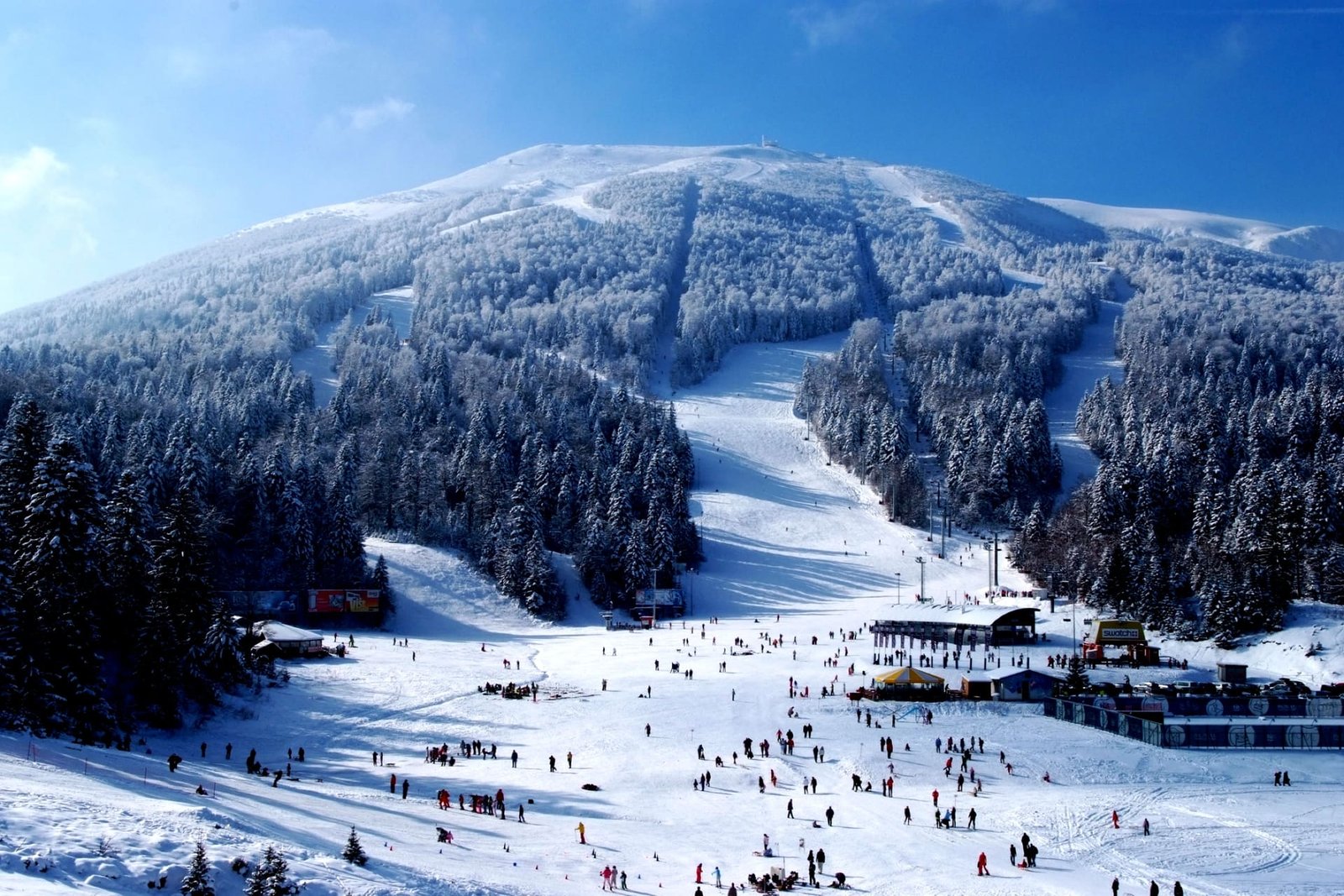
In February 1984 Sarajevo hosted the Winter Olympics, and the mountains that staged them are still the heart of Bosnian skiing. Bjelašnica held the men's alpine events, Jahorina the women's, and the plateau of Igman between them the ski jumping and cross-country. All are within about 30 km of the city centre.

Jahorina is the biggest and most developed resort, with modern gondolas and chairlifts, a top station above 1,900 metres, a long stretch of floodlit piste for night skiing, and plenty of hotels and slope-side bars. An adult day pass last season cost between 73 and 86 KM depending on the date, roughly 37 to 44 euros, with only small increases announced for this winter. Peak pricing applies over the New Year holidays and most of February.
Bjelašnica is smaller, steeper, and wilder, with a summit at 2,067 metres and an 800-metre vertical drop. Day passes were 59 KM last season, around 30 euros. It is the locals' favourite on a clear day and the view from the top takes in half the country. Neighbouring Igman has gentle nursery slopes that suit children and first-timers.

The season usually runs from mid December to early April, with the most reliable snow from January to early March. Equipment hire is cheap and available at the base of every resort. If you do not ski, it is still worth the drive up for a sledge, a walk in the snow, and lunch in a mountain hut.
Tip: ski midweek if you can. At weekends half of Sarajevo heads up the mountain, and the access roads and lift queues show it. From Monday to Friday you will have long runs almost to yourself.
Mostar and Herzegovina without the crowds
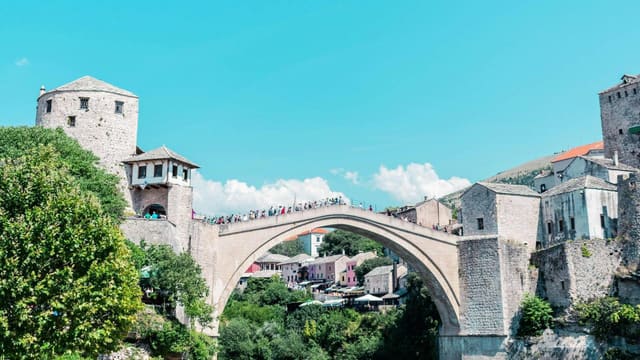
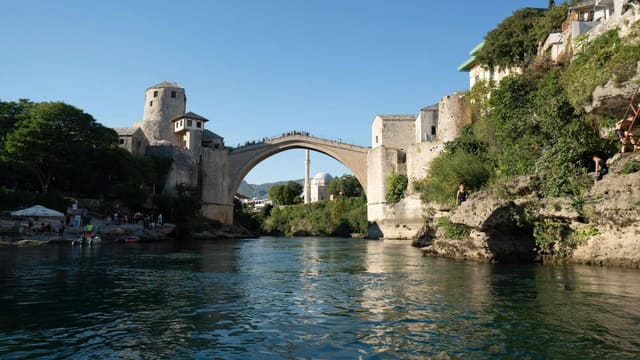
If the cold gets too much, drive south. The road to Mostar stays open all winter, as does the train, and somewhere in the Neretva canyon the snow gives way to green. Arriving in Mostar on a January morning is a small shock after the summer photographs: the Old Bridge empty, the bazaar half-shuttered, the river loud and high below. You can stand in the middle of the span for as long as you like, which in August is simply not possible.
Some of the seasonal cafes and stalls close, and you should bring a rain jacket, but the restaurants that matter stay open and the low winter sun on the pale stone is lovely. Blagaj, where the Buna river bursts out of a cliff beside the dervish house, is at its most powerful after the autumn rains. Kravice is open too, on shorter hours - no swimming, no crowds, just the roar. Our Mostar day trip guide covers the full route, and the Grand Herzegovina tour runs year-round with the day trimmed slightly to fit the daylight.
Central Bosnia is a good winter day as well. The waterfall in the middle of Jajce sometimes grows a fringe of ice, and Travnik's fortress under snow looks like an engraving.
What to skip until spring
A few things are better saved for a warmer visit:
- Lukomir and the high villages. The gravel road to Bosnia's highest village is buried from around December until April or May.
- Swimming and rafting. The rivers are for looking at until late spring.
- Long hikes. The mountains are serious in winter and trails are unmarked under snow. Stick to the resorts unless you are with a mountain guide.
- Packed itineraries. With nine hours of daylight, two good stops in a day beats four rushed ones.
Getting here and getting around
Winter flight schedules to Sarajevo are thinner than in summer, so check routes before you fix dates. For winter 2026/27, Wizz Air keeps its London Luton flights running twice a week and adds Berlin, Bratislava, and Prague in December, while Ryanair pauses its Sarajevo routes until the end of March. The big network carriers fly year-round through their hubs. Morning fog in the valley does sometimes delay flights in December and January, so avoid tight connections.
On the ground, main roads are cleared quickly after snow. Winter equipment is compulsory from 1 November to 1 April. If mountain driving in the dark is not your idea of a holiday, a private transfer from the airport to your hotel or up to the ski resorts is inexpensive and saves a lot of stress.
One more thing in winter's favour is price. In 2026 the UK Post Office's annual city costs survey ranked Sarajevo the best-value city break of 50 European cities, at about 248 pounds for two people including two hotel nights, meals, and sightseeing. In winter, outside the New Year week, it is cheaper still.
What to pack
Dress for a proper continental winter in Sarajevo: a warm coat, hat, gloves, and above all boots with a good grip. The old town's stone paving is polished smooth by centuries of feet and turns treacherous under ice. Layers help, because cafes and restaurants are heated generously. For Mostar, a lighter jacket and an umbrella will do. If you are heading up the mountains, sunglasses and sunscreen are not a joke - the sun above the inversion is fierce.
Is winter the right time for you?
If it is your one and only visit and you want waterfalls, swimming, and long golden evenings, come between May and September instead. But if you have been before, or you like the idea of a snowy, smoky, coffee-scented old city with Olympic skiing on the doorstep and a day trip to the Mediterranean thrown in, winter is a wonderful time to be here.
We run tours through the winter and shape each day around the weather and the light. Tell us your dates and what you would like to see, and we will put together a custom plan that makes the most of the season - or browse all our tours to see where you might start.
Frequently Asked Questions