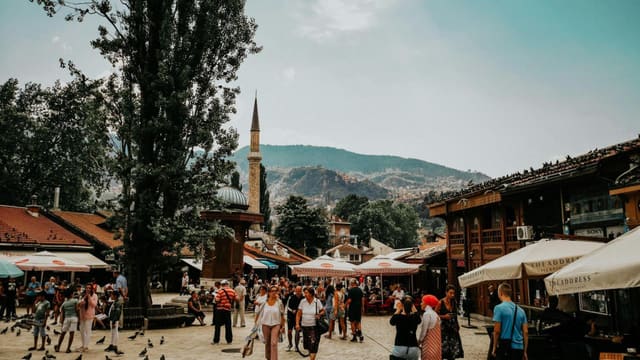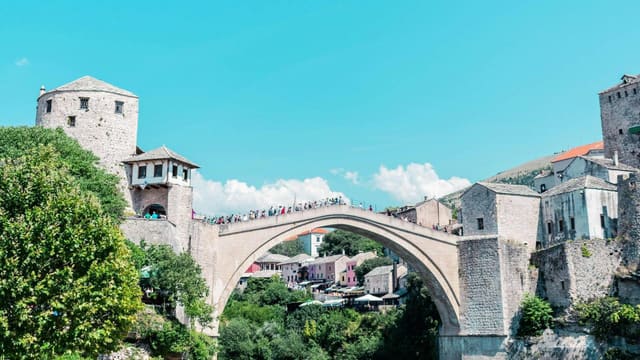
Ask ten people in Sarajevo when you should come and you will get roughly three answers: May, June, or September. They are right, and the reasons are simple - warm days, long light, full rivers, and room to breathe on the Old Bridge. But Bosnia and Herzegovina is a small country with two very different climates packed into it, and the honest answer depends on what you are coming for. A swim under a waterfall, a ski weekend, and a quiet walk through Mostar all have different best months.
This is how the year actually feels on the ground, month by month, with the numbers to back it up.
Two climates in one small country
The thing most visitors do not realise until they drive it: Sarajevo and Mostar are only 130 km apart, and they do not share a climate.
Sarajevo and central Bosnia are continental and mountainous. The capital sits in a valley at a little over 500 metres with peaks above 2,000 metres on its doorstep. Summers are warm rather than hot, evenings stay cool even in August, and winter brings real snow - around three weeks' worth of snowy days in a typical year. Rain is spread evenly through the calendar, so there is no month to avoid on that score.
Mostar and Herzegovina belong to the Mediterranean. Once the road drops through the Neretva canyon the air changes, figs and pomegranates appear, and the thermometer climbs. Mostar is the sunniest city in the country and one of the hottest in this part of Europe, with July and August highs averaging 33°C. It almost never snows there. The catch is autumn, when Herzegovina takes most of its annual rain in a few heavy weeks.
| Sarajevo high / low | Mostar high / low | |
|---|---|---|
| January | 4° / -3° | 9° / 3° |
| April | 17° / 5° | 20° / 9° |
| June | 25° / 13° | 30° / 17° |
| August | 28° / 14° | 34° / 20° |
| October | 17° / 7° | 22° / 12° |
| December | 4° / -2° | 10° / 4° |
Those are long-term averages in Celsius, and recent summers have run hotter than the averages suggest. In July 2024 Mostar recorded six days in a row at 40°C or above.
Spring: March, April, May
March is still the tail of winter in Sarajevo - single-digit days, the odd late snowfall, skiing still going on Jahorina and Bjelašnica. Herzegovina is already waking up, with highs around 16°C in Mostar and almond and cherry blossom along the Neretva. Visitor numbers are the lowest of the whole year, so if you want Mostar's old town to yourself, this is when it happens.
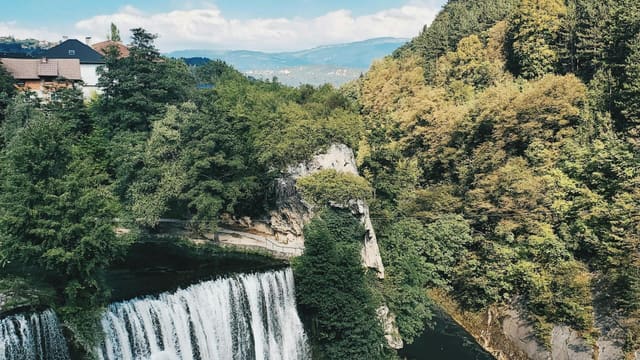
April is when the country turns green. Snowmelt pours off the mountains, which makes it the most dramatic time of year for water: the falls at Jajce and Kravice are at their loudest, and rafting starts on the Neretva and the Una. Expect changeable weather, a few showers, and highs of 17 to 20°C. Arrivals jump by more than half compared with March, mostly around Easter, but it never feels busy.
May is the first of the three best months. Sarajevo reaches the low 20s, Mostar the mid 20s, and the hills are at their most vivid. Everything is open, the evenings are long enough to eat outside, and the rivers are still running high. The mountain road to the highland village of Lukomir usually reopens around now after a winter under snow. If we had to send a first-time visitor in one month only, it would be a close call between this and September.

Summer: June, July, August
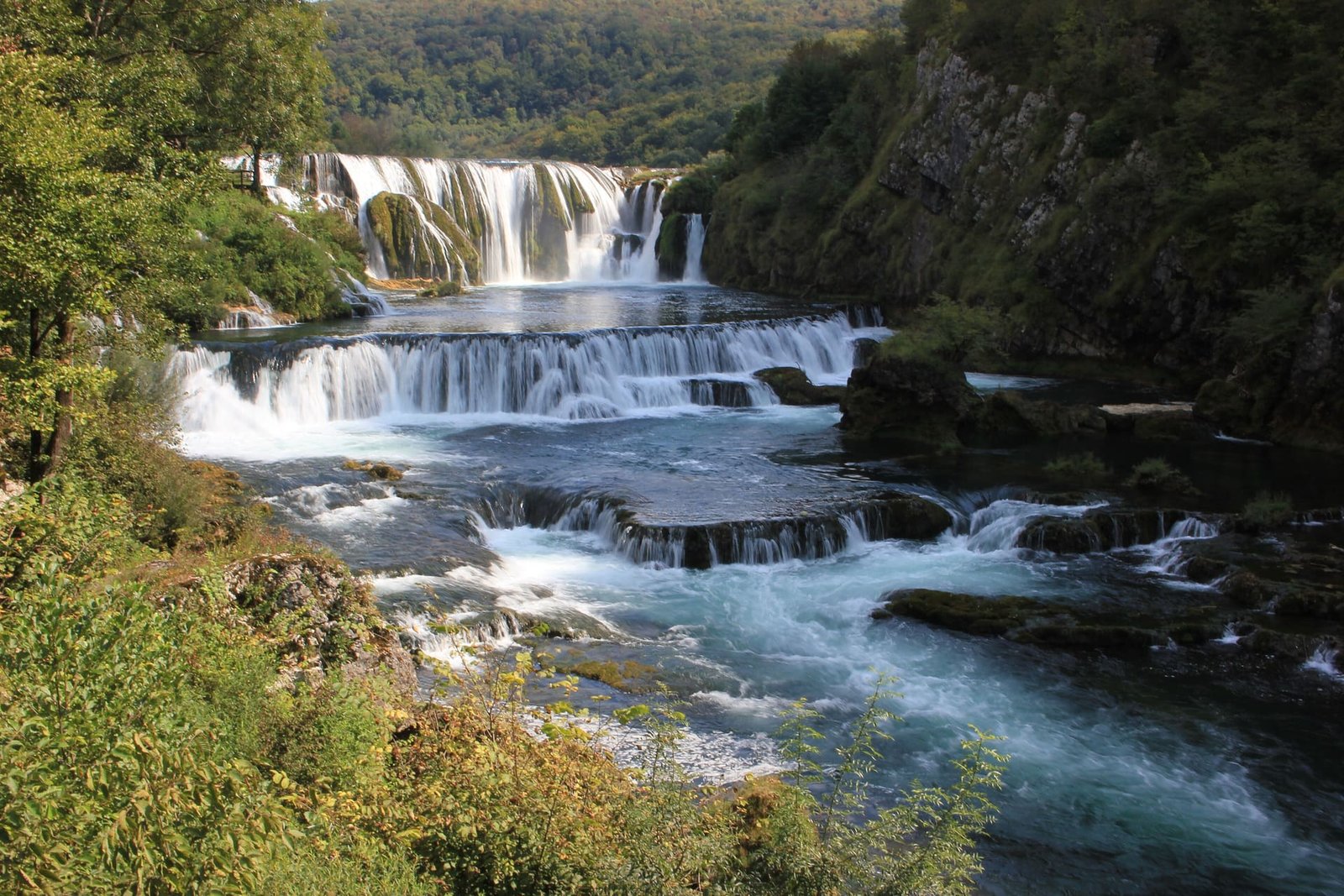
June is summer without the downsides. Sarajevo sits around 25°C, the swimming season opens at Kravice, where the park stays open until ten at night from June to September, and the day-trip crowds in Mostar have not yet peaked. Rafting on the Neretva is at its liveliest in May and June while the water is still high.
July is festival month. In Sarajevo the old town hosts Baščaršija Nights, a free programme of concerts, theatre, and folklore that fills every evening of the month. In Mostar the month ends with the traditional high-diving competition from the Old Bridge, held on the last Sunday of July - 2026 was the 460th edition, which tells you how long young men here have been throwing themselves off that parapet. Red Bull's cliff diving series has also made Mostar a regular stop around the same dates. On 11 July the country marks the Srebrenica commemoration, a solemn day worth being aware of.

July is also when Herzegovina gets seriously hot. Plan Mostar, Blagaj, and Počitelj for the morning, take a long lunch in the shade, and finish in the water.
August is the peak of everything: the most visitors, the highest prices, the hottest days. The country sees about two and a half times as many arrivals as in March, and Mostar's old town is shoulder to shoulder by late morning with day-trippers. Sarajevo handles August much better - 28°C by day, cool at night - and in the middle of the month the Sarajevo Film Festival takes over the city with open-air screenings, red carpets, and a week-long street party. It is the most fun the capital has all year. Book rooms early for that week. Early August also brings the big youth festival to Međugorje, which fills accommodation across western Herzegovina.
Tip: in July and August, start the day early. Leaving Sarajevo by 7.30 puts you on Mostar's Old Bridge before the heat and the tour buses, and that one decision changes the whole day.

Autumn: September, October, November
September is the month locals quietly prefer. The heat breaks, Sarajevo drops back to the low 20s, Mostar to a very pleasant 27°C, and the water at Kravice is still warm enough for a swim. The crowds thin out noticeably after the first week. In Herzegovina it is harvest time - grapes come in around Mostar and Trebinje, and roadside stalls at Počitelj pile up with figs and pomegranates.
October is a gamble that usually pays off. Sarajevo's hills turn copper and gold and the light is beautiful, with highs still around 17°C. Herzegovina starts its rainy season, so a Mostar day can be glorious or soaked, and it is worth keeping your plans flexible by a day. Visitor numbers stay surprisingly healthy into October, but the feel is unhurried. It is a very good month for central Bosnia and for the historical sites around Sarajevo.
November is the quietest and wettest month of autumn, and the one we would steer a first-timer away from. Days are short, Mostar gets close to 190 mm of rain, and the first cold snaps settle over Sarajevo. The compensation is cultural: Jazz Fest Sarajevo runs in early November, cafes are at their cosiest, and prices are at their lowest. By law, cars must carry winter equipment from the start of November until the start of April, which matters if you are renting.
Winter: December, January, February
Winter splits the country in two. Sarajevo goes properly cold - highs around 4°C, lows below zero, snow on the rooftops of Baščaršija more years than not. The ski season on Jahorina and Bjelašnica, the mountains that hosted the 1984 Winter Olympics, typically runs from mid December into April, and both are within about 45 minutes of the city. That combination - a historic capital with cheap, uncrowded skiing next door - is rare in Europe.

The honest downside is air quality. Sarajevo sits in a bowl, and in the coldest, stillest weeks of December and January a temperature inversion can trap smog over the valley for days at a time. It does not happen every week, and the fix is pleasant: go up. The cable car to Trebević or a drive to the Olympic mountains puts you in clean air and sunshine above the cloud.
Mostar in winter is mild, around 10°C by day, and very quiet. Rain is likely but snow is not. The Old Bridge without the crowds is a different experience altogether. Kravice stays open through the winter on shorter hours, from 7am to 5pm - nobody is swimming, but the falls are full and you will share them with almost no one.
From early February into March, the Sarajevo Winter festival brings several weeks of concerts, exhibitions, and theatre. And in 2027 Ramadan falls in winter, from around 8 February to around 9 March. Sarajevo is a lovely place to be for it: each evening a cannon is fired from the Yellow Fortress at sunset to mark the end of the fast, the minarets light up across the valley, and the old town comes alive after dark. Visitors are welcome, restaurants stay open during the day, and the only thing you need to do differently is get to the fortress an hour early for a spot.
So when should you come?
- For a first visit that covers everything: mid May to late June, or September.
- For swimming at Kravice and river days: June to mid September.
- For waterfalls at full power and green hills: April and May.
- For festivals and nightlife: July and mid August in Sarajevo.
- For skiing and a snowy old town: January and February.
- For the lowest prices and no crowds: March and November, with a flexible attitude to weather.
- For Mostar specifically: avoid midday in July and August, or avoid those months altogether.
However long you have, the country is compact enough that the weather rarely ruins a trip - if it is raining in Mostar, it is often dry in Sarajevo, and the other way round. Most visitors find that five to seven days is enough to see both halves.
We run our tours all year and adjust the days to the season - earlier starts in August, more time indoors and at the table in winter, a swim stop whenever it is warm enough. Have a look at our day tours, or tell us when you are coming and we will suggest the route that suits that month best. If your dates are fixed and your wish list is not, a custom tour is the easiest way to let the season decide.
Frequently Asked Questions