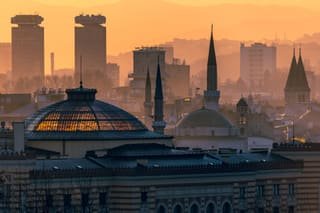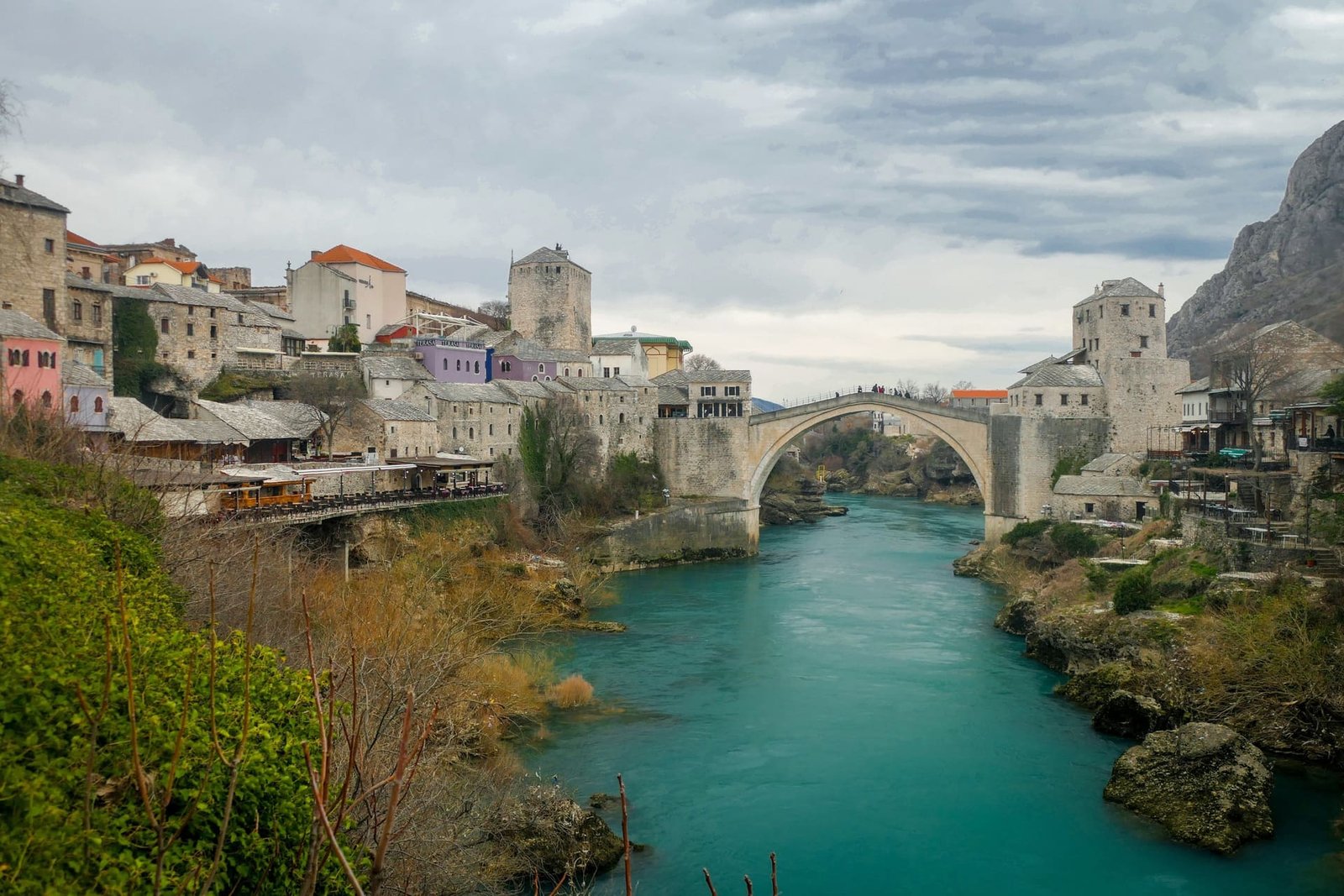
Everyone has seen Mostar in July: a packed bridge, a queue for the minaret, coach parties in the bazaar. Almost nobody has seen it on a damp Tuesday in January, which is a shame, because it may be the better version. The stone is darker with rain, the river loud and high, the cafes steamy, and the bridge is yours to stand on for as long as you like.
In this guide
This guide is about that Mostar and the Herzegovina around it between December and March. It is meant to sit beside our Bosnia in winter guide, which covers the whole country, and our Mostar day trip from Sarajevo, which has the full summer route, so here we stick to what changes when the weather turns.
Mostar in winter: the weather
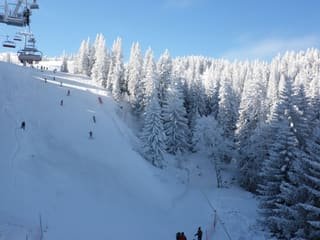
While Sarajevo sits under snow, Mostar sits in a Mediterranean pocket. Winter daytime highs are around 8 to 11 degrees, with nights that fall to 2 or 3. Frost happens but is not the norm, and snow in town is rare enough to be noticed.
What you get instead is rain. December is generally the wettest month of the year, with well over a hundred millimetres falling over about two weeks. Sunshine is scarce, averaging only about four hours a day, so the light is soft and grey and the days feel shorter than they are. January and February are drier but still unsettled.
Wind is the other factor. Cold air from the north and north east tends to arrive in Mostar as a blast rather than a snowfall, often as the bura, the cold gale that pours down from the mountains. It makes a bridge in January feel colder than the thermometer says. A windproof layer matters more than a thick coat.
By March the town has turned. Highs reach the teens, orange and pomegranate trees look alive, and the rain begins to let up. We cover the month by month picture for the country in our best time to visit Bosnia guide.
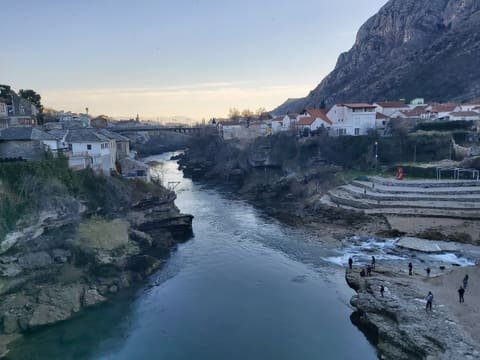
The Old Bridge without the crowds
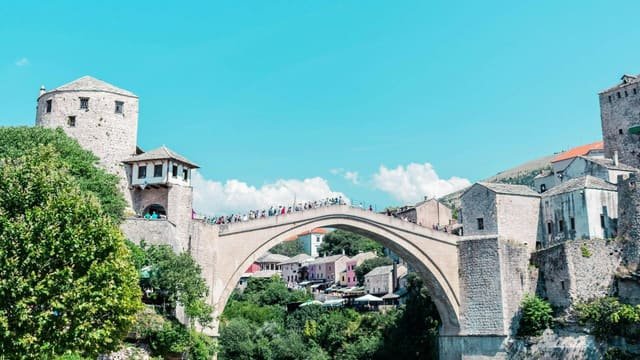
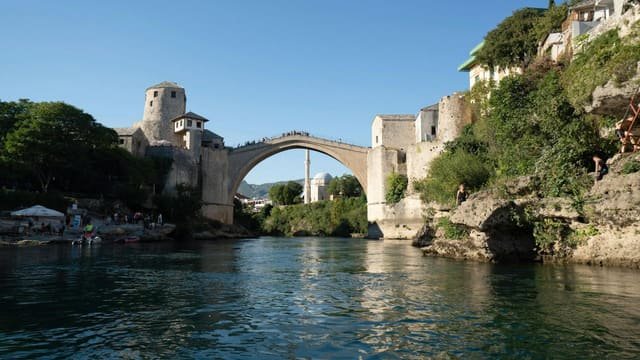
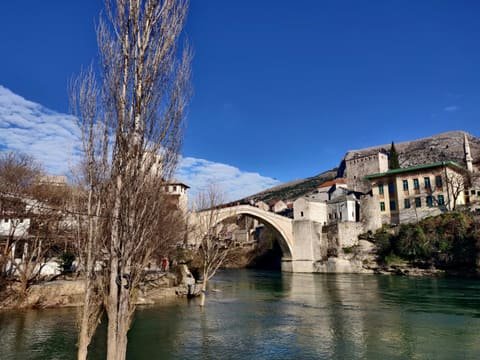
The Stari Most, completed in 1566 and rebuilt after it fell in 1993, is the one thing you must see, and winter gives you the best shot at it. In the morning there may be two or three other people on it. Stand at the top of the arch and listen to the Neretva below, and try the view from the minaret of the Koski Mehmed-Pasha Mosque if it is open.
The one thing winter takes away is the diving show. The divers work the bridge from spring into early winter, and the big annual event is in late July. Out of season a few will still jump for a collected fee that is higher than in summer, but it is rare and the water is cold, so treat a dive as a lucky extra and not a reason to visit.
What is open and what is shut
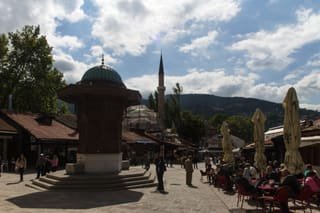
The old town does not close, but it thins out. Many of the souvenir stalls in Kujundžiluk shut on weekdays or keep short hours, and a handful of riverside terraces close until spring. The restaurants and the cafes on the main lanes remain open, heated and often half empty, and the mosques, museums and the bridge itself stay as normal. Opening hours for small museums are not always published, so a quick call or message to your host saves a wasted walk.
Mostar in December
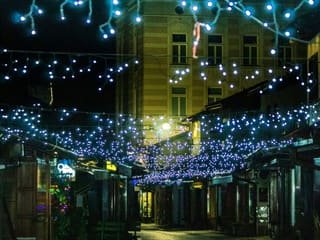
December is the one month with a festive pull, and it is worth planning around. Mostar has run an annual Advent programme for years, with market houses, an ice rink, concerts and food stalls set out along the promenade and the university area. It draws well over a hundred thousand visitors a season, so this is a proper event and not a token tree in a square. It usually opens in late November or early December and runs into early January, and the city publishes the dates shortly before.
The festive calendar here follows the religious mix. West Mostar has a Catholic majority, so Christmas is on 25 December with midnight mass and decorated streets, while the east bank, with its Muslim and Orthodox communities, has its own calendar, and Orthodox Christmas falls on 7 January. In practice the Advent crowd is largely local, from Mostar and the surrounding villages, which gives it a warmth the summer crowds never get. Prices for a room are low before the week between Christmas and New Year, when they rise. If you would rather spend Christmas in Sarajevo, see our Sarajevo Christmas and New Year guide.
Blagaj, Počitelj and Kravice in winter
All three summer classics are open in winter, and each is different in the cold.
Blagaj
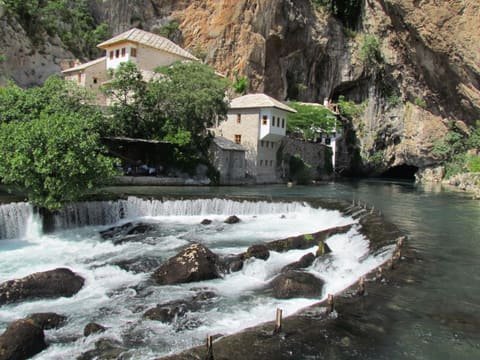
The Blagaj Tekke, the white dervish house where the Buna river leaves its cliff, is arguably better in winter. The Buna runs high and loud after rain, the mist hangs on the rock and the terrace restaurants are quiet. Winter closing is usually between 4 and 5 pm, and the entrance fee is a few KM, so bring small change. Modest dress is expected, shoulders and knees covered, and headscarves are provided at the door. The boat to the cave mouth does not always run in cold weather.
Počitelj
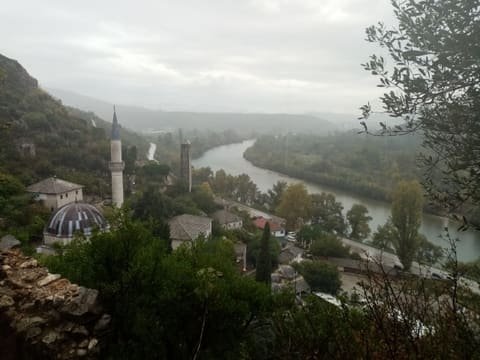
Počitelj needs no ticket for the village, and the climb up through the stone lanes to the tower is the same in January as in July, only with fewer people and wet cobbles. Wear shoes with grip. The Hajji Alija Mosque keeps reduced hours in winter. If you are driving down to Dubrovnik, it sits conveniently on the main road, as we describe in the summer guide.
Kravice
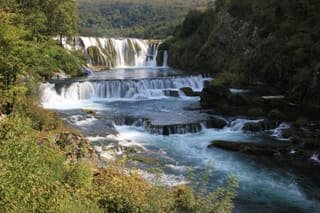
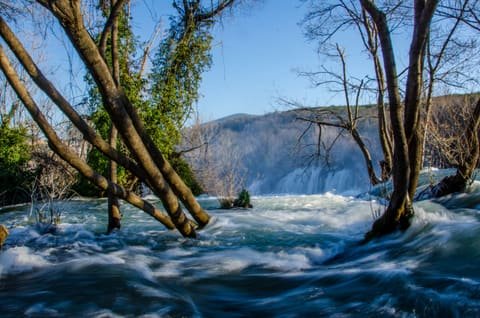
The Kravice waterfalls are open every day through the winter. Winter hours are 7:00 to 17:00 from November to February. An adult ticket is 20 KM, about 10 euros, children under 7 go free, and prices stay the same all year. There is no swimming at this time of year and the cafes keep limited hours, but the falls are full and nearly empty of visitors. Plan on an hour or so.
Our Herzegovina tours run through the winter, trimmed to fit the shorter daylight. The Grand Herzegovina tour takes in Mostar, Blagaj and Kravice from Sarajevo, and the Best of Herzegovina does the same country from Mostar. If you want to swap a stop or add Počitelj, tell us what you want.
Trebinje and wine country
If you have an extra day, head south east to Trebinje, a calm stone town that is usually warmer than Mostar and almost deserted in winter. Its centrepiece is the old town and the 16th century Arslanagić Bridge, moved stone by stone to its present spot after a dam flooded its original site. Above the town are the Tvrdoš monastery, known for its wine, and the Hercegovačka Gračanica church on its hill.
Herzegovina is wine country, and winter is a decent time to taste. The signature grapes are Žilavka, a crisp white, and Blatina, a dark, structured red, and you will find them on every wine list in the region. The main centre is Čitluk, about half an hour from Mostar, with family wineries welcoming visitors. Some close or ask for an appointment in the cold months, so ring ahead. Winter food is a pleasure on its own: lamb under the iron lid, sač style, soups, smoked meats and a plate of local cheese and bread.
Getting to Mostar
From Sarajevo. The road follows the Neretva valley and is cleared quickly, though the passes can be icy on bad days, and winter equipment is a legal requirement until 1 April. The train takes about two hours through the canyon and is wonderful on a clear day. There are usually two trains a day, one early in the morning and one in the late afternoon, and the timetable changes in mid December, so check the current times. Our guide to every way from Sarajevo to Mostar compares the options.
From Dubrovnik and Split. Dubrovnik is roughly 140 km away, about two and a half hours including the border, and Split about 175 km, roughly three hours. Queues at the crossings are a summer problem and in winter they are usually short. We run private transfers from Dubrovnik, Split and Sarajevo, year round.
Where to stay and what it costs
Stay in or near the old town so you can walk to the bridge in the evening, when the day trippers have gone and the lanes are at their best. Winter rates are among the lowest of the year. Confirm heating when you book, as some small guesthouses cope better than others on damp nights. Meals are cheap by Adriatic standards.
If you are unsure whether to base yourself here or in the capital, our Sarajevo or Mostar guide helps. When you are ready, tell us your dates or browse all our Bosnia tours. For Olympic history in the same trip, see our guide to the 1984 Winter Olympics sites in Sarajevo.
Header photo: Hibasi / Wikimedia Commons (CC BY-SA 4.0)
Frequently Asked Questions