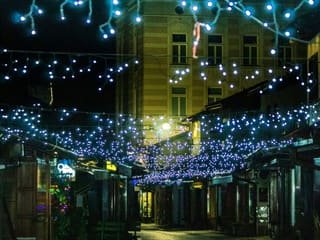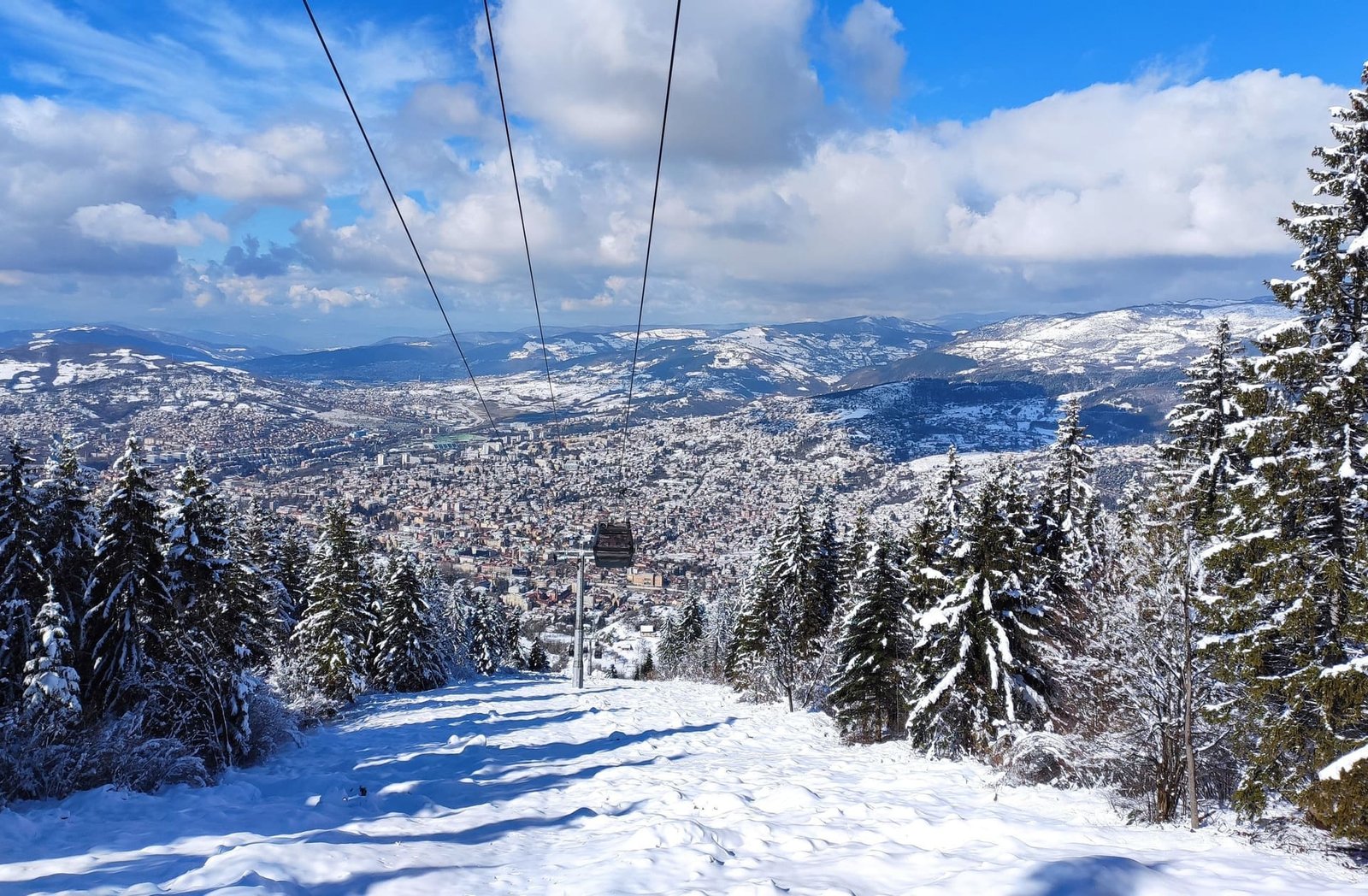
A Sarajevo weekend in winter is a different trip from the summer one. The light goes by half past four, so you will do your walking in the middle of the day and spend evenings in cafes that smell of coffee and wood smoke. In return you get snow on the minarets, almost no queues, and prices that seem like a misprint to anyone coming from Vienna or Munich.
In this guide
This is a plan for two or three days between December and February. It does not repeat the full attraction list; for that, see our guide to things to do in Sarajevo. What follows is the winter version: what to put where, so that the cold and the early dark work for you. For the bigger picture on weather, skiing and what to pack, read the Bosnia in winter guide first.
Before you plan the days
Daylight is the constraint. Around the shortest day in December sunset is about 4:10 pm, and by January it is nearer 4:35 pm, with roughly nine hours of light in total. Put the outdoor sights between 9 am and 3:30 pm, then let the evenings be about food and warmth.
Getting in from the airport. Sarajevo airport is about 10 km from the old town, a drive of 20 minutes or so in normal conditions. Fog in the valley can delay winter flights and snow slows the road, so leave slack when you book onward plans. We run airport transfers year round, including in the snow, and a pre-booked driver saves you hunting for a taxi after a late landing.
Where to sleep. Stay in or near Baščaršija, or on the flat streets around Ferhadija a few minutes to the west. Everything on day one is then a short walk, and the stone paving there is polished and slippery under ice, so you want to be close to your door.
Day 1: the old town on foot
Morning: Baščaršija and the great mosque
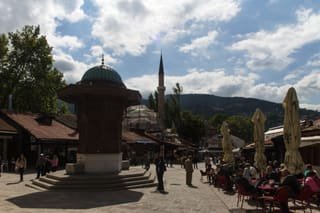
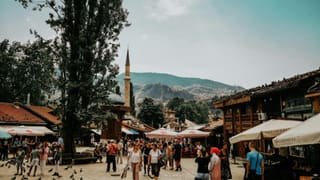
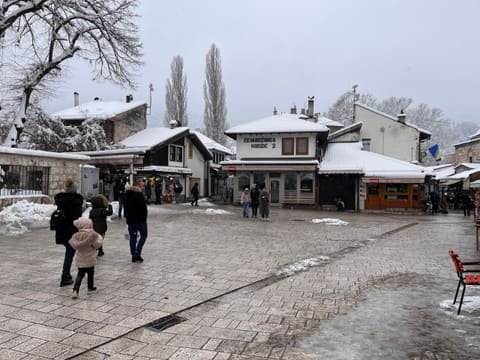
Start about 9 am in the square at the heart of Baščaršija. In winter the old town is yours: the coppersmiths in Kazandžiluk still hammer, but the tour groups are gone and the Sebilj fountain stands in the empty square with snow on its roof. Have a slice of burek and yoghurt at a bakery, then walk five minutes along Sarači to the Gazi Husrev-beg Mosque. Visitors are welcome between prayers, with shoulders and knees covered and shoes off at the door. The mosque is heated, which on a cold morning is a quiet bonus.
Midday: the Vijećnica and Ferhadija
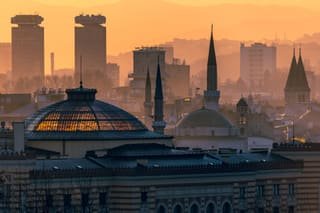
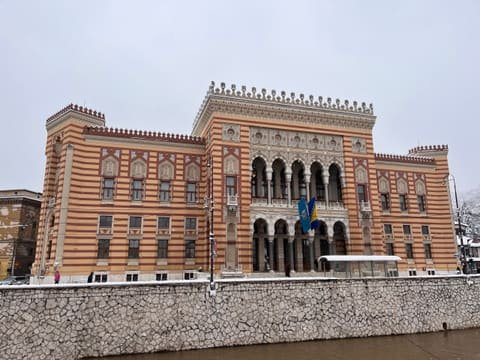
The striped red and yellow Vijećnica, the City Hall, stands at the eastern end of the old town and is worth stepping into for the stairwell alone. It held the national library until shelling set it on fire in August 1992, and it reopened in 2014 after years of restoration. Hours and ticket prices for visitors change, so check before you go. Then walk west along Ferhadija, the pedestrian street where the Ottoman town gives way to the Austro-Hungarian one, and look for the Sarajevo Roses, mortar scars filled with red resin. Lunch can be ćevapi, the small grilled sausages in flatbread, which are best on a cold day when the grill smoke is a feature.
Afternoon: museums, which are the point of winter
This is where a cold-weather weekend pays off, since the best things to see are indoors. The War Childhood Museum on Logavina is small and hard to forget, built from objects and short memories of people who grew up during the siege. It is usually open from 11 am to 7 pm and an adult ticket is about 15 KM, around 7.70 euros, but check the website in January, when museums sometimes shorten their hours. Near the cathedral, Gallery 11/07/95 is a heavier exhibition about the Srebrenica genocide. Most people choose one or the other, depending on mood, and that is fine. If you want something lighter, the National Museum has archaeology and natural history in a big Austro-Hungarian building, and Svrzo's House is an Ottoman family home with wooden rooms and a courtyard.
Evening: dinner and the warm drink
Spend the evening eating. Begin with begova čorba, the chicken and okra soup, and then pick a stew in a clay pot, klepe dumplings with garlicky yoghurt, or sogan-dolma, onions stuffed with meat. Finish with tufahija, the poached apple with walnuts, and a Bosnian coffee in a copper džezva, poured into small cups. On the way back, a cup of hot salep from a cafe costs very little and is exactly right at minus five.

Day 2: up the mountain, or into it
Choose between a snow day and a history day. If the valley is smoggy, favour the mountain.
Option A: Trebević and the bobsled track
The Trebević cable car starts on Hrvatin street, a few minutes' walk from the Vijećnica, and carries you from 583 metres to 1,160 metres in about seven minutes. A return ticket for visitors is 30 KM, about 15 euros, and winter hours differ from summer, so check them that morning. Very often you rise out of grey air into sunshine. At the top, walk into the pines to the abandoned 1984 Olympic bobsled track, a concrete ribbon covered in graffiti and, in January, in snow. Wear grippy shoes and stay on the paths.
Option B: a ski day
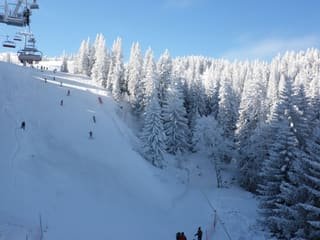
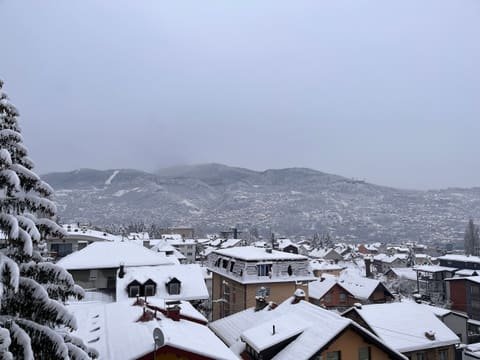
Jahorina and Bjelašnica are about 30 km from the centre, so you can ski and sleep in Sarajevo. For the 2026/27 season a day pass at Jahorina is up to 98 KM at peak times, and at Bjelašnica 69 KM at the ticket office. See our skiing in Bosnia guide for equipment, levels and which mountain to choose. We run ski-resort transfers and ski days through the winter, so book a transfer if you do not want to drive a mountain road in the dark.
Afternoon: the Tunnel of Hope
If you chose Trebević, finish at the Tunnel of Hope by the airport, about 12 km from the old town. In 1993 diggers working in secret cut a tunnel under the runway to link besieged Sarajevo with free territory, and a short stretch is open to walk through. In winter it is open 9 am to 4 pm with last entry at 3:30 pm, and the ticket is 20 KM, so bring cash. After a ski day you will not make it back in time, so save the tunnel for day 3. Allow an hour and go early, so you are inside before the light drops. The Spirit of Sarajevo tour covers the tunnel and the hills by car if you would rather not organise the taxis.
Day 3: Vrelo Bosne and the Yellow Fortress
Morning and afternoon: Vrelo Bosne in snow
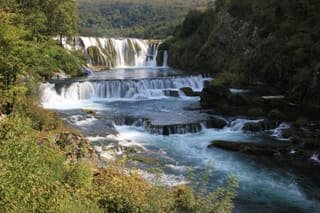
Vrelo Bosne, the source of the Bosna river, is at the end of a flat avenue of plane trees about 3 km long on the edge of Ilidža, roughly 15 to 20 minutes by car from the centre. In snow it looks like a postcard: clear water boiling out of the ground into pools with ducks and swans, white branches above. Entry is 6 KM for foreign visitors. Horse carriages (fijaker) run down the avenue on many winter days, weather permitting, so ask about them at the gate. You can also take tram line 3 to Ilidža and walk. Dress warmly, since the damp is keen by the water. If you skied yesterday, the Tunnel of Hope is about ten minutes from Ilidža: go straight after Vrelo Bosne, by about 1 pm, so you are in well before the 3:30 pm last entry and back in town for sunset.
Late afternoon: sunset at the Yellow Fortress
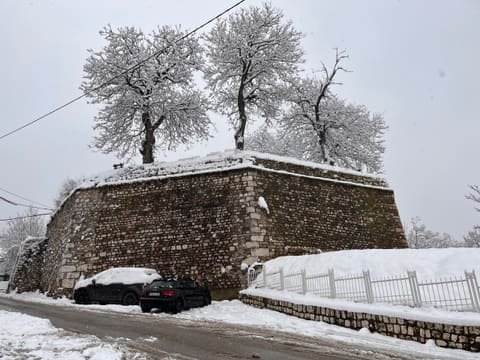
Be at the Yellow Fortress (Žuta tabija) around 3:30 pm in January, an hour before the sun goes. It is a steady twenty-minute climb from Baščaršija through the Kovači and Vratnik neighbourhoods; on snow or ice, go slowly or take a taxi up and walk down. Locals gather with a flask of tea as the minarets turn pink, and the call to prayer rises from every direction at once. Bring gloves, since the wind on the wall is sharp.
Easy winter day trips from Sarajevo
If you have a spare day, or want to swap one of the above, these are the day trips from Sarajevo that make sense in cold weather.
- Vrelo Bosne (above) is the shortest, and is good in any weather.
- Ski slopes. Jahorina and Bjelašnica for the day, with a lunch in a mountain hut, even if you do not ski. A sledge and a walk are enough.
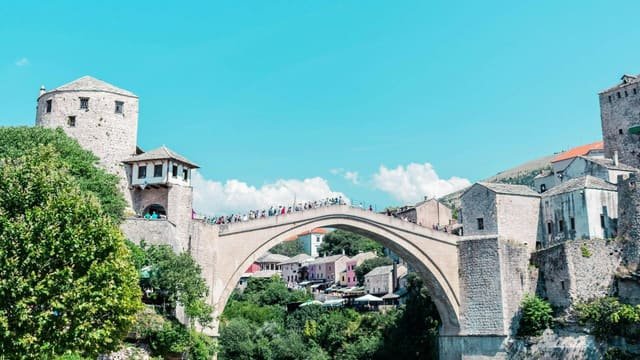
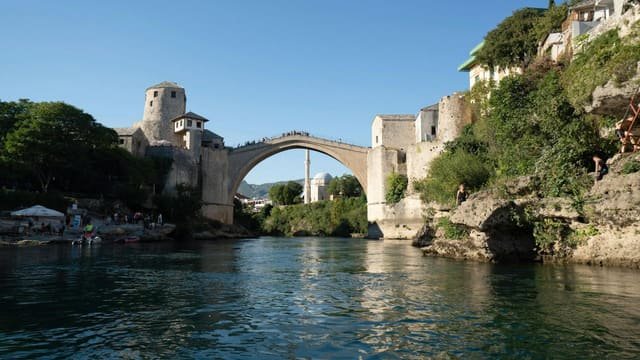
- Mostar. About two hours by road, with the Old Bridge nearly empty. There are usually two trains a day on the Sarajevo to Mostar line, taking just under two hours, and the timetable changes in mid December, so check the new times. Our Mostar in winter guide covers what stays open, and the Grand Herzegovina tour runs through the winter.
- Konjic and the Neretva canyon. The road to Mostar follows the Neretva past Konjic and its Ottoman bridge, which is the first stop on our Grand Herzegovina day.
- Travnik and Jajce. The Central Bosnia towns work in snow, as our Central Bosnia day trip guide explains.
Any of these can be turned into a private day, and we run all our tours between December and March. Tell us your dates, or ask for a custom tour.
Festive weeks and festivals
If your weekend falls in late December or early January, read our guide to Sarajevo at Christmas and New Year, because the holiday market and the concerts change how you plan. From early February to late March the Sarajevo Winter festival fills the city's halls with concerts, theatre and exhibitions. February also marks the anniversary of the 1984 Games, and our guide to the Sarajevo Winter Olympics explains what remains.
Tip: put the outdoor item at the start of each day and the museum at the end. If the air is bad in the morning, swap the order and go up the mountain first, where it is usually clear.
A few practical notes
- Shoes. Boots with proper grip, not trainers. Old town paving is the main danger.
- Cash. Bring KM for small museums and the tunnel.
- Air. Check an air-quality app before breakfast and re-plan if the valley is grey.
- Hours. Opening times shift in winter, so confirm the cable car, the tunnel and the museums a day ahead.
For the full list of sights, return to things to do in Sarajevo, or browse all our tours.
Header photo: Migdad Rešidović / Pexels
Frequently Asked Questions