Ask someone in Sarajevo where to find the best baklava and you will get a long answer, a short argument and very likely an invitation to coffee. Sweets here are not a dessert course you can skip. They arrive on a tray with the coffee, they mark every holiday on both the Muslim and the Christian calendar, and a visit to someone's home without a slice of something is close to unthinkable.
In this guide
Most of what you will taste came with the Ottomans, who ruled Bosnia for four centuries and left behind syrup, walnuts and a love of very small, very sweet portions. Austria-Hungary added cream cakes and Viennese style pastry shops after 1878. Neighbours in Croatia and Serbia share many of the same recipes. The result is a short list of sweets that you will meet again and again, plus a few that belong to one corner of the country. Here is what they are, when people eat them and where to try them, starting with the one we hand out in Mostar.
Breskvice, the little peaches
Breskvice look like fruit and taste like a celebration. Two small, rounded biscuits are baked, hollowed a little and sandwiched together with a filling, often ground walnuts with jam or a little cocoa, sometimes a splash of rum. Each pair is then dipped in red colouring, sometimes with a blush of yellow, and rolled in sugar, so a plate of them looks like a bowl of tiny peaches.
They belong to the whole former Yugoslavia, and Croatian, Serbian and Bosnian families all claim them. You see them on the table at weddings, at Christmas and New Year, at christenings and any big family gathering, and the dish is almost always gone before the cake is cut. They are fiddly to make, which is exactly why they are a sign that someone has made an effort.
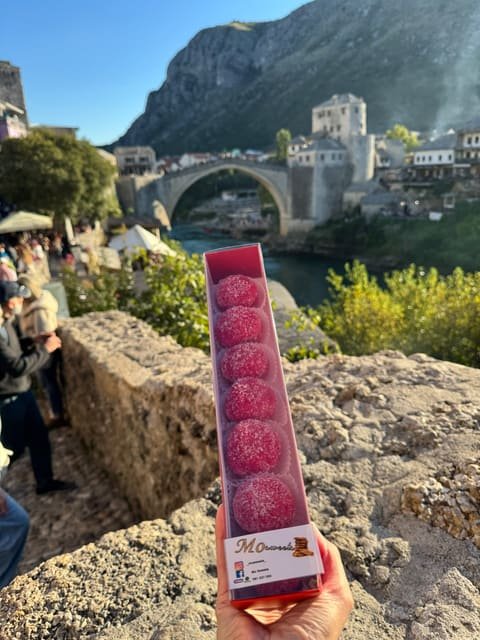
Breskvice from Mostar: Mo sweets
Our breskvice come from Mo sweets, a local sweet maker in Mostar that works hand in hand with us at Explore Bosnia. Everything is baked by hand and made to order, from cakes and biscuits to full dessert tables for weddings and parties, but breskvice are what Mo sweets is known for.
Every booking on one of our tours that include Mostar comes with a complimentary box of these breskvice. That means the Best of Herzegovina, the Grand Herzegovina tour and any custom tour that includes Mostar. If you would like more to take home, or a dessert table for an event, message Mo sweets ahead of time, since everything is made fresh: find them on Instagram and Facebook.
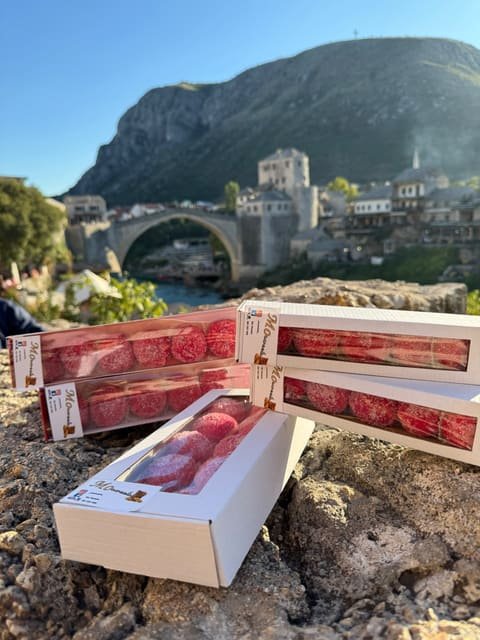
Bosnian sweets at a glance
- Breskvice: peach shaped biscuits for weddings and celebrations.
- Baklava: thin pastry, walnuts and lemon syrup, cut into diamonds.
- Ružice: baklava rolled into small roses.
- Tufahija: a whole apple poached in syrup, stuffed with walnuts, crowned with cream.
- Hurmašice: little ridged pastries soaked in syrup, made for Bajram.
- Kadaif: shredded pastry baked with walnuts and syrup.
- Tulumbe: fried ridged dough fingers dropped into syrup.
- Sutlijaš: cold rice pudding with cinnamon.
- Rahat lokum: the soft, sugar dusted sweet that comes with coffee.
- Smokvara: the fig cake of Herzegovina.
How Bosnians eat sweets
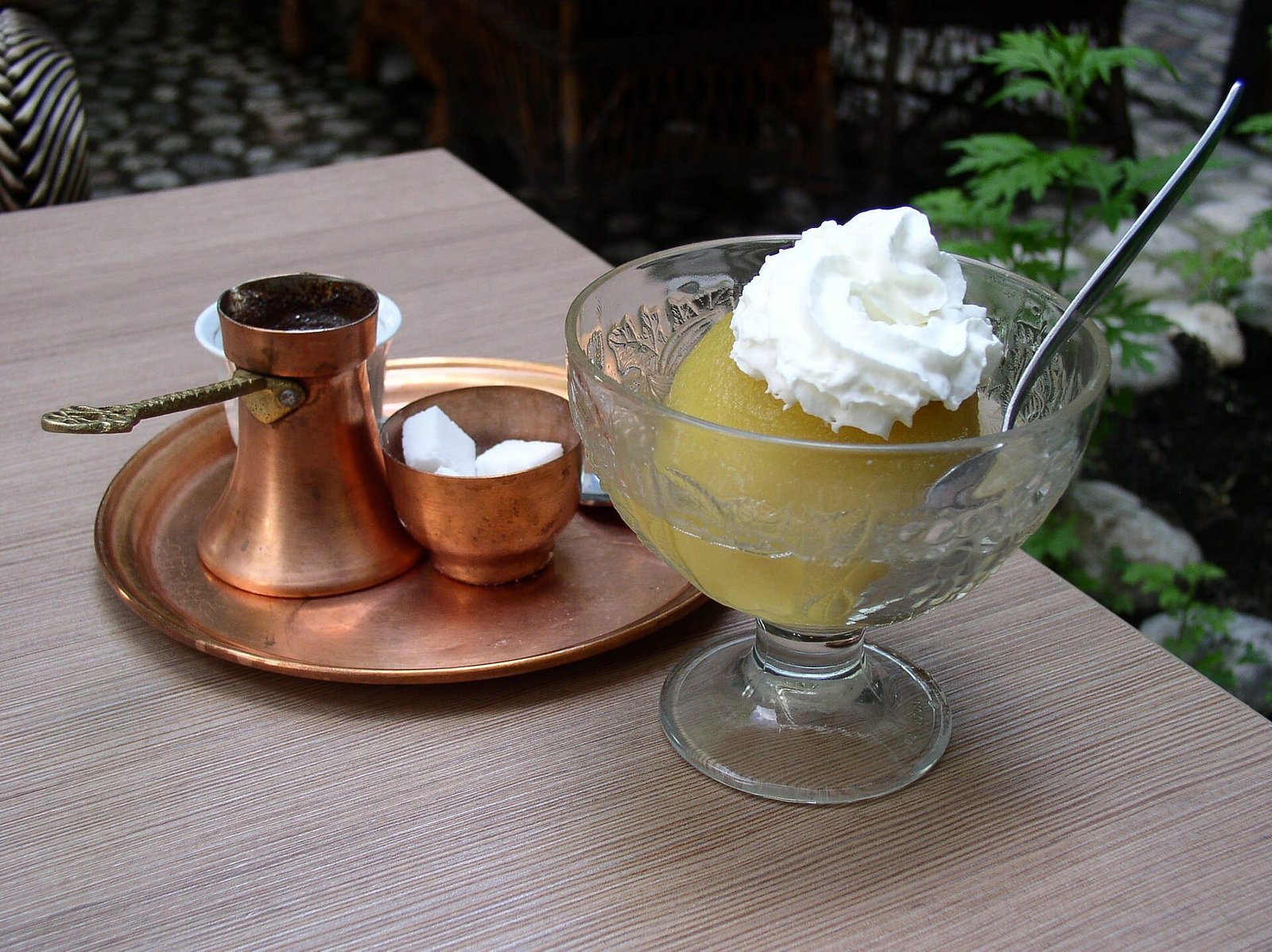
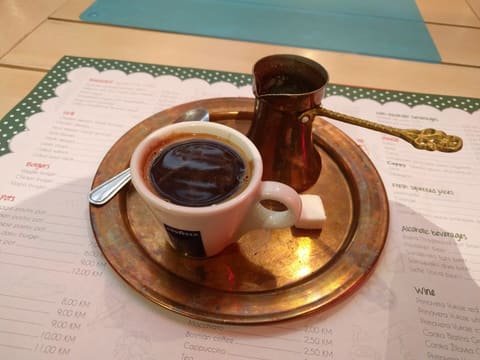
Sweets and coffee go together. Order a Bosnian coffee in the old town and it comes in a small copper pot, the džezva, on a tray with a cup without a handle, a sugar cube, a glass of water and a cube of rahat lokum. Nobody stirs the sugar in. You take a bite of the cube or hold it on your tongue and sip, then finish with the lokum. Drinking it slowly is the whole point, and in a good cafe nobody will hurry you.
In a slastičarna, the sweet shop, you choose from the glass counter, sit down and the waiter brings your plate and a coffee. Portions are small because the sweets are dense. Old town places are often cash only, in convertible marks.
At home it is more generous. A guest gets coffee and a plate of whatever has been baked that week, and refusing everything is a little rude, so take one piece and praise it. Before Bajram and before Christmas, kitchens across the country turn into small factories, and the trays are carried to neighbours and relatives for days.
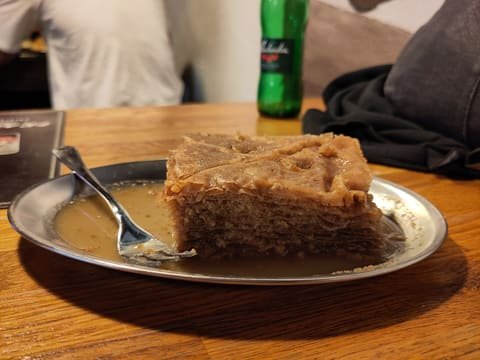
Baklava, the Bosnian way
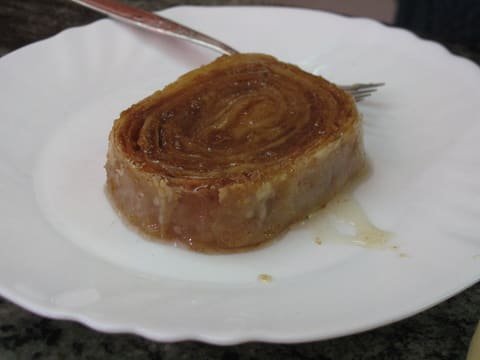
Baklava is layered sheets of thin pastry with ground nuts between them, baked and then soaked in syrup. You will find it from Istanbul to Athens, and the Bosnian version has its own character. It is mostly made with walnuts rather than pistachios, it is built with many thin layers, and the syrup, called agda, is made with sugar, water and lemon, which gives it a slightly sharper finish than the Turkish kind. Some home recipes stretch the walnuts with a little fine breadcrumb.
Sarajevo shops now sell pistachio and chocolate versions next to the classic, so if you want the local one, ask for baklava with walnuts, sa orasima. Look out too for ružice, little roses: the same pastry and walnut filling rolled up and cut into rounds, so each piece looks like a rosebud. They are a staple at Bajram and a good choice if a full diamond of baklava feels like too much.
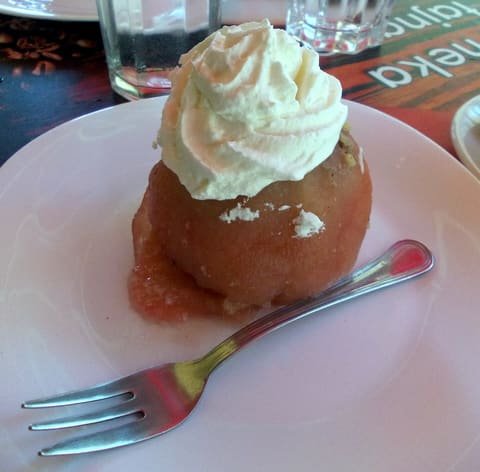
Tufahija
If Bosnia has one dessert of its own, this is it. Tufahija is a whole peeled apple, poached gently in sugar syrup until it is soft but still holds its shape, then hollowed and filled with ground walnuts. It is topped with whipped cream and often a cherry, and served cold in a glass dish with some of the syrup around it. The name comes from the Arabic word for apple, and like most things here it travelled through Turkish on the way.
Tufahija is a sweet for guests. It is what a household makes when someone is coming, and some families call it the Bosnian way of saying welcome. In Sarajevo you will find it in most traditional sweet shops in Baščaršija, and it is lighter than it looks. Eat it with a spoon, slowly, and drink the syrup at the end if no one is watching.
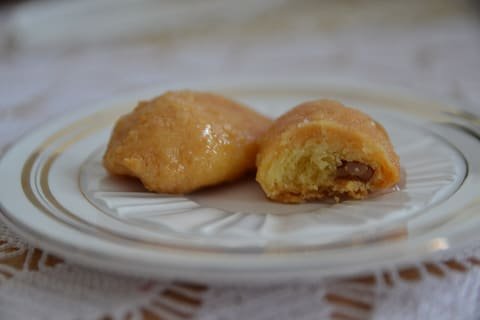
Hurmašice and the other syrup sweets
Hurmašice take their name from hurma, the date, because of their shape: small oval pastries pressed against a grater or a fork to give them ridges, baked until golden and then drenched in lemony syrup while still hot. They are rich, soft in the middle and very sweet. Every family has a recipe, and some hide a piece of walnut inside. They are the sweet of Bajram, made in large trays at the end of Ramadan and again at Kurban Bajram and offered to every visitor, but you can buy them all year.
Kadaif uses shredded pastry, a nest of fine golden threads, baked with butter and walnuts and finished with syrup. Tulumbe are fingers of soft dough piped through a star nozzle, fried and dropped into syrup, crisp outside and almost hollow inside. They were traditionally made during Ramadan for iftar, the evening meal that breaks the fast, and now turn up in every sweet shop.
For something less sticky, order sutlijaš, a cool rice pudding made with milk and sugar and dusted with cinnamon. It comes from the Turkish sütlaç and is the easiest Bosnian dessert to like on a hot afternoon.
Sweets of Herzegovina
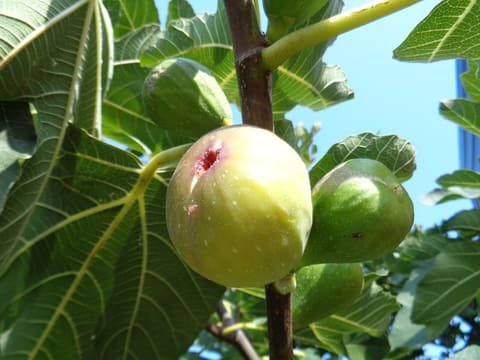
Down in the warm south, sweets follow the fig. Herzegovina is fig country, and every garden around Mostar, Blagaj and Počitelj seems to have a tree heavy with fruit in late summer. Families dry them on the roof for winter and cook them into a thick paste, pekmez.
The best known result is smokvara, fig cake: layers of dough and fig pekmez soaked in more fig syrup until the whole thing is dark, soft and fragrant. It was chosen for a Bosnian postage stamp marking World Food Day in 2020, which tells you how seriously the region takes it. Look out too for smokvenjak, a firm loaf of ground dried figs with walnuts and almonds, sometimes with a splash of grape brandy, cut into slices like salami.
You are more likely to meet these in a home or at a village stall than in a city sweet shop. On our Herzegovina tours, ask your driver where the figs are good that week: in late summer you often see them sold at stalls by the road.
Sweets through the year
The calendar decides what is on the table.
- Ramadan: tulumbe and other syrup sweets after iftar, and busy sweet shops late into the evening. The dates move about eleven days earlier each year.
- Ramazanski Bajram and Kurban Bajram: hurmašice, baklava and ružice, carried from house to house.
- Christmas and New Year: breskvice, walnut rolls and cream cakes, with Catholic Christmas on 25 December and Orthodox Christmas on 7 January.
- Weddings: breskvice and a long table of small cakes, often made by relatives or ordered from a home baker.
- Late summer: fresh figs in Herzegovina, and the start of pekmez season.
If you are travelling in winter, our Mostar in winter and Sarajevo Christmas and New Year guides cover what else is going on.
Where to try Bosnian sweets
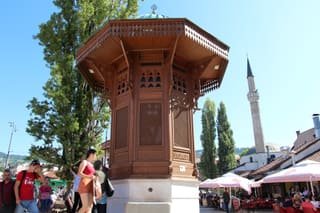
Sarajevo. Head for Baščaršija, the old bazaar. The lanes around the Sebilj fountain are lined with sweet shops and baklava counters, some of them decades old. One of the best known is the Baklava Shop on Ćurčiluk Veliki, with walnut, pistachio and a few newer flavours. For tufahija and hurmašice, choose any traditional slastičarna where locals are sitting with coffee. Our things to do in Sarajevo guide has a route through the old town that passes most of them.
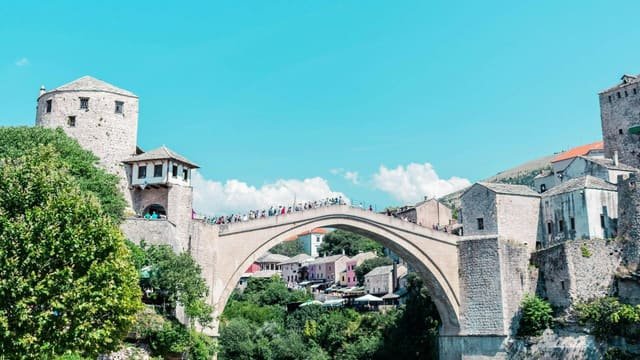
Mostar. The old town around the Old Bridge has baklava and lokum in nearly every second shop window, aimed at day visitors, so quality varies. Taste before you buy a box, and read recent reviews. For breskvice, see Mo sweets above. If you are planning a day in Herzegovina, our Mostar day trip guide covers the rest of the route.
At home. The best Bosnian sweets are still the ones made in someone's kitchen. If you are invited in, go, and leave room.
Allergies and diets
Walnuts are the backbone of Bosnian sweets. They are in baklava, ružice, tufahija, kadaif, most breskvice and many hurmašice, and shops use the same trays and syrup for everything, so there is real risk of cross contact. If you have a nut allergy, the word to know is orasi, walnuts, and the safest choices are sutlijaš and plain cakes, after asking. Almost everything also contains wheat, and many sweets use eggs, butter or cream. Vegan options are rare, although some home baklava is made with oil instead of butter.
If you are joining one of our Mostar tours and have an allergy, tell us when you book. You can ask us anything here, or browse all our Bosnia tours.
Header photo: tufahija and Bosnian coffee at Morića Han, Sarajevo. Antidiskriminator / Wikimedia Commons (CC0)
Frequently Asked Questions